Stop Being Self-Absorbed! Your Conversion Content Might Be "Turning Off" Customers
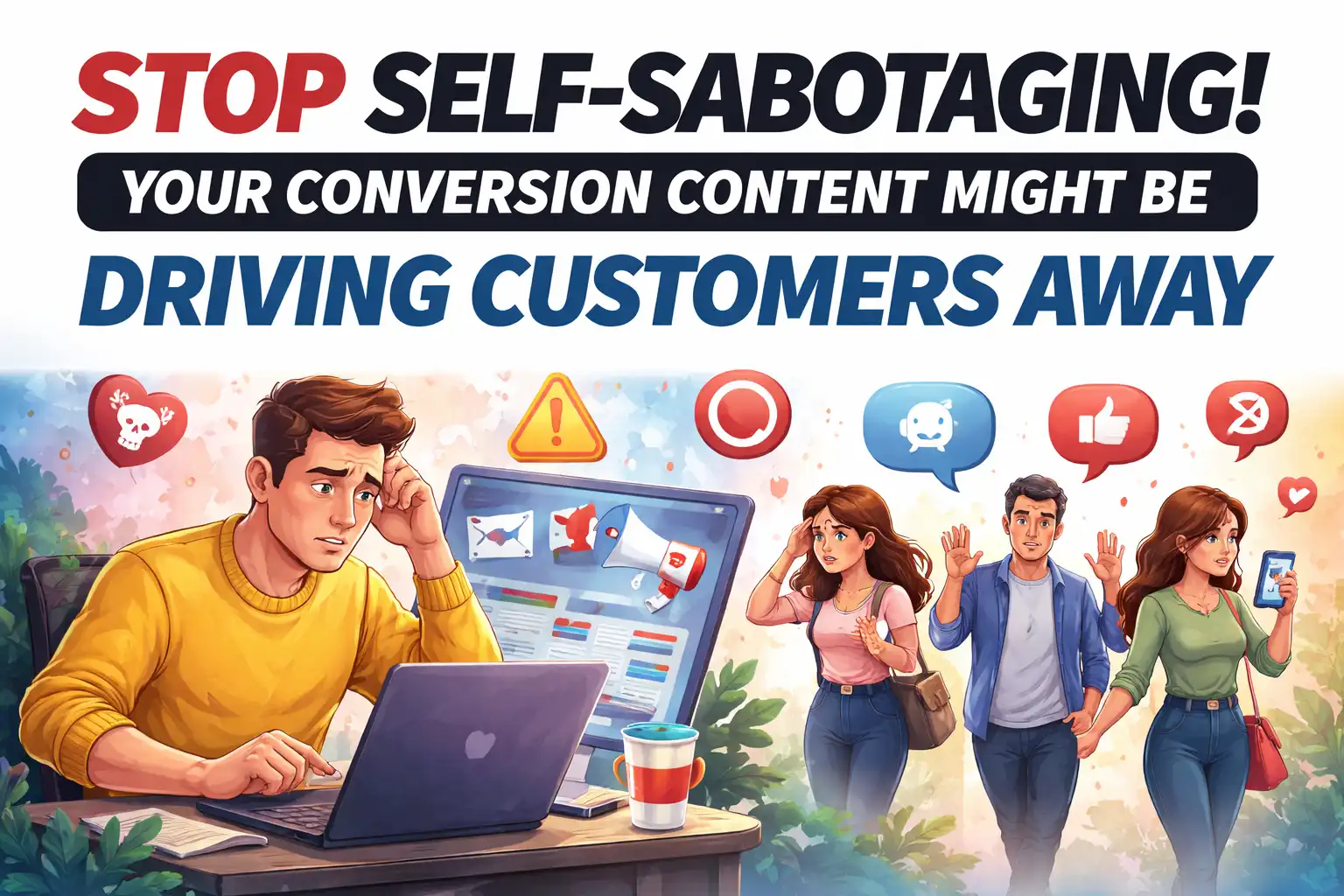
As a veteran who has been navigating the SaaS world for years, I’ve seen countless “beautiful‑looking” conversion pages. Their logic is clear, features are comprehensively listed, and the design is cool, yet click‑through and conversion rates remain lukewarm, stubbornly refusing to rise. Where’s the problem? I later realized that, more often than not, we write “sales copy” rather than “persuasive content.” Users don’t care how many buttons you have; they only care whether “this thing can save me a few extra overtime hours.”
In my early years, I also blindly followed conversion copy formulas—AIDA, PAS, 4C… I tried them all with mixed results. Then, for a landing‑page overhaul of a project‑management tool, I stripped away all the flashy industry jargon and feature lists and left a blunt statement: “Stop losing sleep over ‘Can we launch by next Monday?’” paired with a genuine late‑night screenshot of a disheveled programmer. That month, registrations doubled. That’s when I finally realized: the core of persuasiveness isn’t telling users how powerful you are; it’s making them feel you understand their pain.
From “What They Search For” to “What They Fear”: Understanding Users’ Deep‑Rooted Anxieties
We constantly talk about “user pain points,” yet “pain point” is a vague term. When a user searches “best project management tool,” the surface need is to find a tool, but the deeper need might be “afraid the project will be delayed again and get scolded by the boss” or “fear being blamed for chaotic team communication.” If your content stays at the level of tool comparison, it will never hit the nerve that triggers a purchase.
I have a habit of spending a lot of time reading competitors’ user reviews—not the positive ones, but the one‑ and two‑star complaints. Those hide users’ most authentic, unmet fears. For example, if users complain “too many notifications cause me to miss the important ones,” your conversion copy can highlight “smart noise‑cancellation, only alerts you about what matters.” That’s orders of magnitude more persuasive than simply saying “a powerful notification system.”
When AI Starts Understanding “Human Language”: A Paradigm Shift in Content Production
Honestly, continuously producing this psychologically insightful conversion content is mentally exhausting. You have to constantly switch perspectives—marketing, sales, support, even venting colleagues—to draw inspiration. A single person or a small team quickly hits a capacity ceiling.
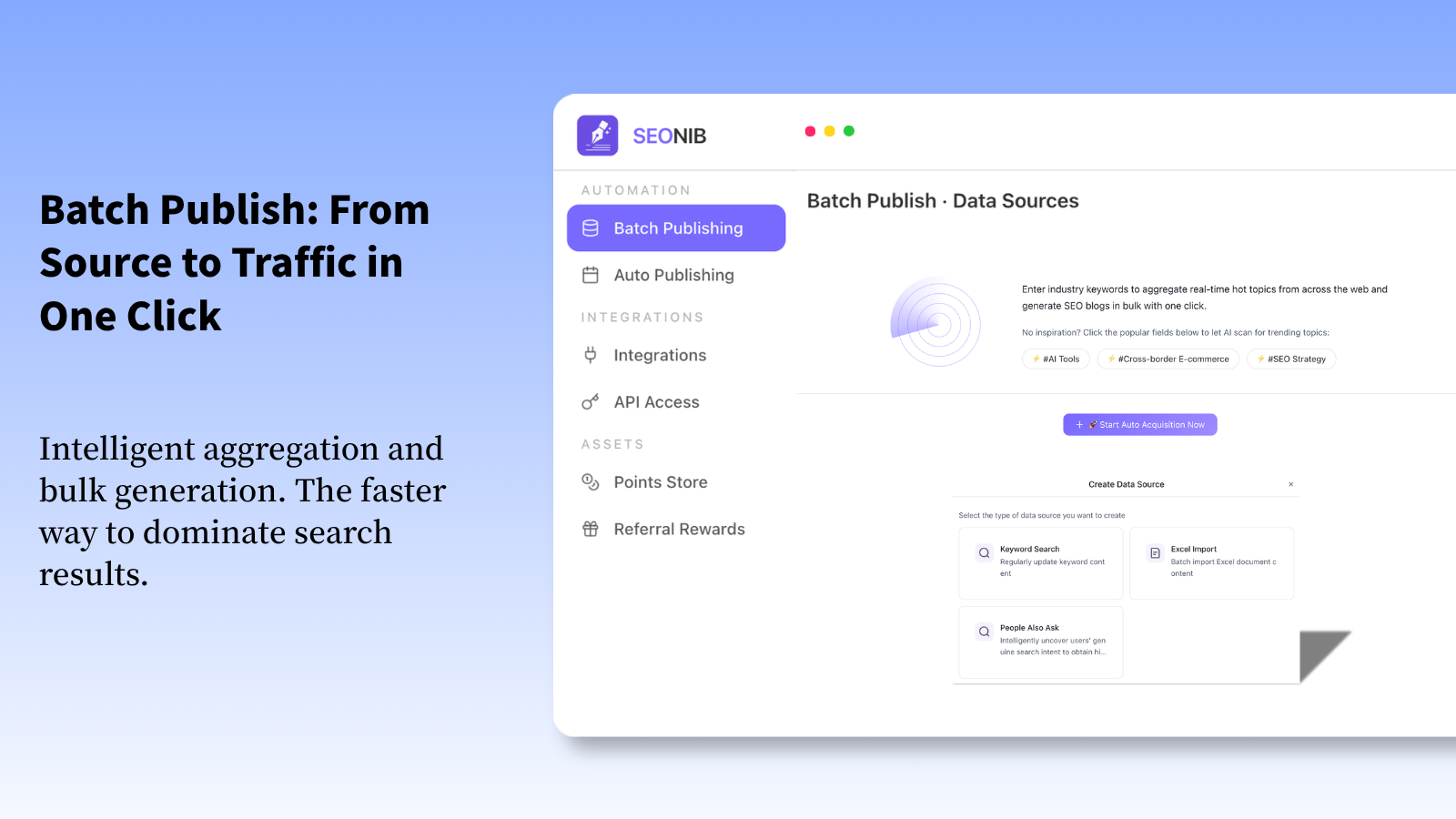
Later, I started experimenting with tools to scale this “insight.” I introduced SEONIB, an AI‑driven SEO and content agency. What I value most isn’t its ability to auto‑generate articles, but its workflow: starting from trend discovery, the system analyzes massive search data and question patterns, automatically identifying phrases that contain user anxiety and genuine needs. It’s like equipping my content strategy with a “user psychology sonar.”
I no longer have to guess what’s troubling users today. SEONIB will tell me that in the past week, searches for “how to deal with missed project deadlines” have surged. So my next wave of landing‑page content for project managers should revolve around “deadline‑fearing” rather than generic collaboration features.
Persuasiveness Lies in the Details: “Translating” From Features to Scenarios
With a precise pain‑point direction, the next step is “translation.” Stop saying “Our platform uses advanced real‑time collaboration technology.” Try translating that into a scenario:
- Poor translation: Supports multi‑user online editing.
- Good translation: “While your designer is tweaking the final version of the logo, your developer can already start embedding it—no waiting for files to be passed back and forth.”
When SEONIB drafts an article, it tends to adopt a “problem‑solution” structure and automatically includes real‑search “People Also Ask” questions. That inspired me greatly. I applied this approach to product demo videos and email marketing: start with a specific scenario that makes the target user uneasy (e.g., “Is every software update like opening a mystery box, never knowing which feature will break?”), then introduce how our solution precisely defuses the bomb.
Content built on genuine search intent delivers a dimensionality‑reduction strike in persuasiveness. It isn’t a hard sell; it’s a pre‑prepared, perfectly timed conversation.
Continuous Persuasion, Not One‑Time Selling
Conversion isn’t a one‑off transaction. A user who visits your landing page today but doesn’t sign up may simply be at the wrong moment. Real persuasion is an ongoing process. That’s why you need a content matrix: blog posts, case studies, social‑media snippets, product update logs… all should revolve around the same core user psychological motivations, repeatedly confirming “you get them” from different angles.
I set up an automated workflow with SEONIB. It continuously generates and publishes relevant blog content based on core keywords and user questions. This ensures my site always has fresh blood, constantly answering users’ new and old concerns. When a user hesitates because “data migration is too troublesome,” they might later see a blog post titled “Three Steps to Seamless SaaS Platform Migration, Import Historical Data with One Click.” That timely “assist” often becomes the final straw that breaks the hesitation.
In the end, making conversion content persuasive is a arduous migration from a “product perspective” to a “user‑psychology perspective.” You must set aside your infatuation with your product and immerse yourself in users’ frustrations, anxieties, and expectations. Tools and AI can help you systematically uncover these psychological cues and keep your content ammunition stocked, but the “aha, I get you!” resonance still requires a living human to capture and interpret it. It’s exhausting, but when you see the conversion curve finally rise, you’ll feel it was all worth it.
FAQ
Q1: How do I discover the users’ real “pain points” instead of the ones I assume?
A: Don’t rely solely on internal brainstorming. Look at competitors’ negative‑review sections, industry community vent threads, and high‑frequency issues that support receives. A more efficient method is to use data tools that analyze search trends and question patterns, spotting the specific, emotionally‑charged phrases users type, such as “why is X so hard” or “X not working fix.” Those are the gold.
Q2: Does conversion copy need to be lengthy?
A: Not at all. Length depends on product complexity and decision cost. A simple Chrome extension may be summed up in a single sentence. Complex enterprise‑level SaaS requires multi‑layered content to build trust. The key is that, regardless of length, every sentence must target a cognitive or emotional gap—no filler.
Q3: Will AI‑generated content feel mechanical and lack persuasiveness?
A: It will, if you just copy‑paste. My approach is to treat AI (like SEONIB) as an tireless junior market researcher and content architect. It supplies data‑backed structures, drafts, and key points. My job is to inject those rigid elements with real stories, scenarios, and humanized language—an “soul infusion” AI can’t yet replace.
Q4: Is humor appropriate in SaaS conversion content?
A: Use it cautiously, but when done right it’s a secret weapon. The humor must stem from precise self‑deprecation or resonance with the user’s situation, not unrelated jokes. For example, a testing tool could say, “Say goodbye to the cosmic mystery of ‘It works on my machine.’” This makes peers chuckle and feel understood.
Q5: How do I measure whether content truly has persuasiveness?
A: Besides the final conversion rate, watch intermediate metrics: does average time on page increase? does the click‑through rate of the primary call‑to‑action rise? are users more willing to fill out detailed inquiry forms rather than bounce instantly? These data points indicate that your content genuinely engages users and encourages them to take the next step.
分享本文