AI Search Is Here, My SEO Is Not Dead—How to Make ChatGPT Treat Your Site Like a Treasure

At 2 a.m., I revised a 3,000‑word blog three times from start to finish, checked structured data five times, and tested every WordPress plugin for compatibility. The next day I excitedly asked a friend, “Did you find my article?” He replied, “I didn’t search; I just asked ChatGPT.” In that moment, staring at the empty Google Analytics dashboard, I thought: Have I wasted a whole year? Don’t smash your computer. AI search hasn’t overturned SEO; it simply adds a new layer on top of your fundamentals—and that layer is a perfect opportunity to get ahead. In short, to make tools like ChatGPT and Perplexity treat your site as a gem, you don’t need to start from scratch; just solidify the traditional SEO foundation and add a few targeted tweaks.
Can AI Search Really Replace Google? Data Tells You Not to Panic
First, a reassuring number: Google processes about 16.4 billion searches per day, while ChatGPT handles roughly 1 billion queries daily—including many non‑search requests like “make this email more polite.” A 2025 study by the digital‑marketing agency Higher Visibility showed that 79.8 % of Americans still prefer traditional search engines. AI search is certainly growing, but it’s still several orders of magnitude away from replacing Google. However, if your target audience is Gen Z or Millennials, their acceptance is noticeably higher; this group already habitually uses chat interfaces for product comparisons and purchase advice. A content creator on Medium shared an early‑adopter record of AI content creation, noting a phenomenon: while mainstream platforms haven’t caught up, you can pre‑populate content, and when AI search tools crawl you, the benefit window is much shorter than traditional SEO. So don’t be anxious, but don’t stay idle either.
What Exactly Are GEO and AEO? Just Fancy Names for SEO
Every time an acronym appears, it sparks a buzz. GEO (Generated Engine Optimization) and AEO (Answer Engine Optimization) sound like brand‑new disciplines, but when you break them down, they’re essentially traditional SEO plus a layer of fine‑tuning for AI answer scenarios. The basics remain: structured data, entity optimization, topical authority, and content quality. If you can’t achieve these, GEO and AEO become empty castles in the air. My experience is: first get your internal linking strategy, schema markup, and site architecture right, then figure out how to make ChatGPT extract answers from your articles more easily. If you’re not yet comfortable with SEO fundamentals, check out our previously compiled “2026 AI SEO Practical Guide,” which clearly explains how to lay the foundation. GEO isn’t a new discipline; it’s just an extra assignment on top of the old homework.
Want ChatGPT and Perplexity to Notice Your Site? Learn These Moves First
To get AI search tools to actively pull your content, there are several actionable methods.
- Write in Q&A format. ChatGPT and Perplexity prioritize extracting clear question‑answer pairs when generating answers. A pure narrative long‑form article is far less likely to be quoted than an FAQ‑style piece with subheadings.
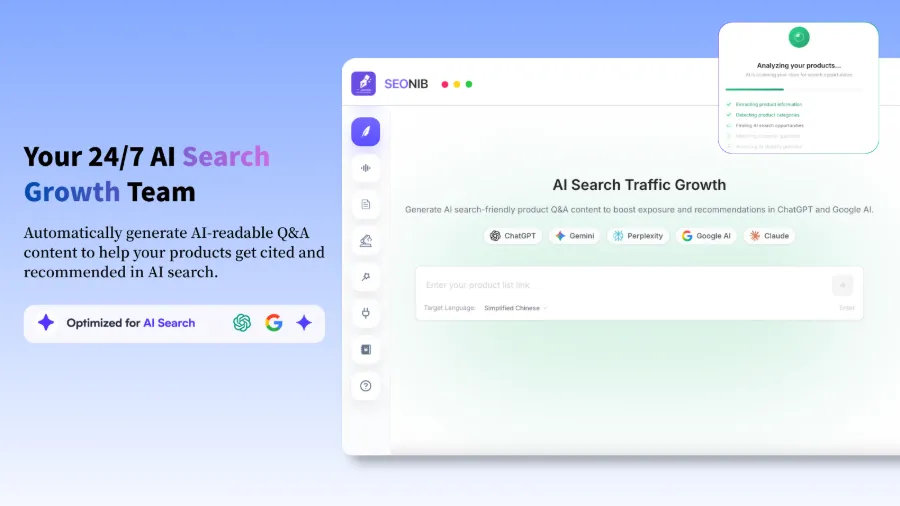
Use clear hierarchical headings. The H2, H3 hierarchy signals to LLMs what are subtopics and how they relate hierarchically.
Cite authoritative sources. AI models give higher weight to statements with verifiable links; even internal links are better than unsupported claims.
Annotate entities and relationships. Don’t just say “this tool is useful”; specify “SEONIB’s automated blog generation feature can help Shopify sellers produce five SEO articles per week.” The more concrete the entity, the easier it is to index.
Maintain a regular content update cadence. AI search tools allocate more exposure to fresh content; a half‑year‑old article is far less likely to be shown than one published yesterday.
Manual Updates Won’t Satisfy AI—I Became an Automation Fanatic
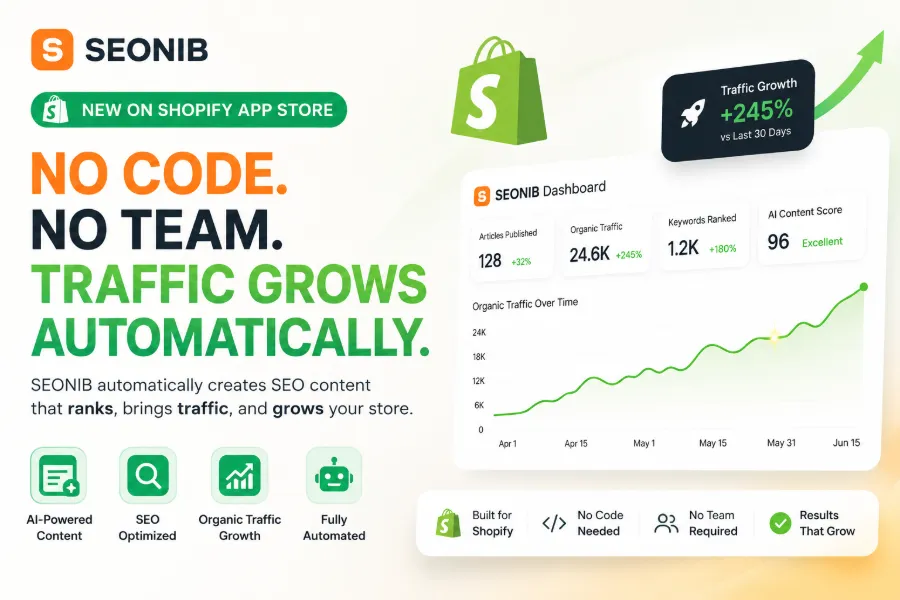
At the start of 2024 I set a flag: update one blog manually every day. I kept it up for two months, spending two hours each day on topic selection, writing, adding images, formatting, and publishing on three platforms. In the third month I stopped, and by the fourth I gave up entirely. Six months later, Search Console showed my site’s authority dropping instead of rising—because the update frequency was erratic, Google deemed the site inactive. AI search crawlers value consistent output even more than traditional search engines; a pause hurts more than no updates at all. I scoured my toolbox and realized that will alone couldn’t solve the scale problem. By chance I tried SEONIB, which breaks the whole content pipeline into trend discovery → content generation → scheduled publishing → multi‑platform sync, automating each step. I only need to set the frequency. For example, I don’t want to log into WordPress manually every day; SEONIB can push the generated content directly to the site. If you’re also wrestling with “how to keep daily updates without burning out,” check out the breakdown of what SEONIB can do and how to use it, which provides a more detailed workflow description.
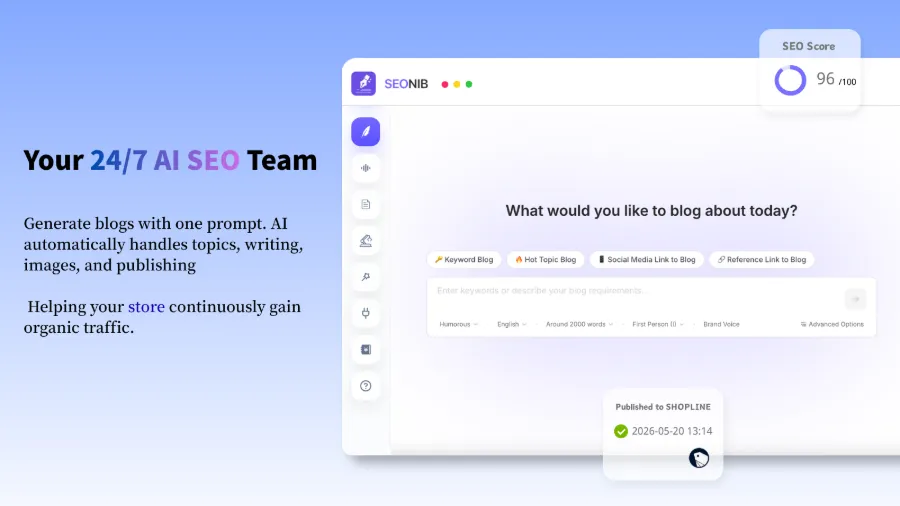
I Let AI Research Trends, Write Articles, Publish, Then Kick Back
How does it work? Four steps, and once set up I can sit back.
Step 1: Trend discovery. I no longer browse various trend sites; SEONIB automatically monitors industry dynamics and pushes high‑potential keywords and topics into a queue. If a long‑tail query suddenly spikes, the system flags it and suggests writing an article.
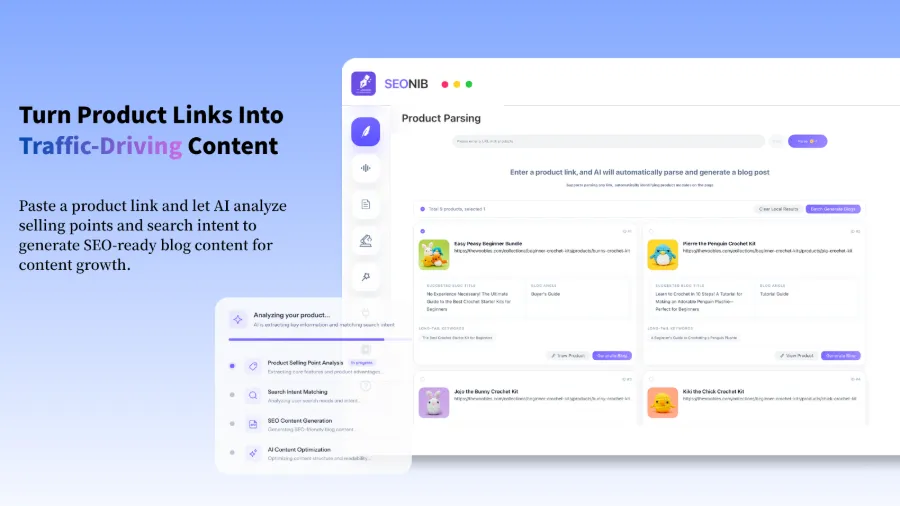
Step 2: Content generation. I usually pick the “product‑to‑blog” mode—throw in a product link I want to promote, and it automatically generates a buyer’s guide or review. Or I use the “keyword‑to‑blog” mode, input a main keyword, and the AI writes a fully structured article based on entity relationships and user intent.
Step 3: Scheduled publishing. I set publishing for 8 a.m. on Mondays, Wednesdays, and Fridays; SEONIB pushes the content on time. I can preview and tweak beforehand, but most of the time I trust the automation. Once the update rhythm stabilizes, AI search crawlers increase their crawl frequency.
Step 4: Multi‑platform sync. Supports Shopify, WordPress, and many other platforms; once content is generated, it’s automatically pushed to all sites—no need to log into each backend and copy‑paste. For example, if your independent site runs on both Shopify and your own WordPress, one output syncs both sides. For detailed multi‑platform sync instructions, see Shopify’s official integration guide, or check out this comprehensive plan for daily automatic publishing on independent sites.
Here’s a live demo video that fully showcases SEONIB’s AEO Q&A, SEO blog auto‑generation, and cross‑platform sync workflow—watch it to see exactly how it all connects.
If your workflow also suffers from “intermittent updates causing authority decline,” take a look at the SEONIB full help documentation, which lists configuration options for various scenarios.
FAQ
Will AI search completely replace traditional search engines?
Not within three to five years. Google’s daily search volume is still more than ten times that of ChatGPT, and the vast majority of users remain accustomed to the traditional search box. AI search will, however, eat into a portion of “quick‑compare” and “Q&A” queries, especially among younger users where penetration is rising.
Do I need to completely rewrite my site’s content for AI search?
No. The key is to reshape existing articles to be more AI‑friendly: add Q&A blocks, use hierarchical headings, highlight entities, and cite authoritative sources. These changes can be incremental on top of existing content; no need to start from scratch.
Will content generated by automation tools be penalized by search engines?
It depends on quality. Google penalizes “valueless bulk‑generated content,” not automation per se. If AI‑generated content includes entity annotations, internal linking, fact‑checking, and is published on a stable schedule, it can be seen as a positive signal. The crucial factor is whether the content truly helps users.
Are GEO and AEO really useful for independent site owners like me?
Yes, but they’re not a magic cure. They won’t instantly boost your Google ranking, but they increase the chance that your site appears in answers from ChatGPT and Perplexity. When a potential buyer asks “Which Shopify store AI tool is best?” your site’s citation probability rises a notch. In the long run, this is a free exposure channel for independent sites under the new search paradigm.
Share Article