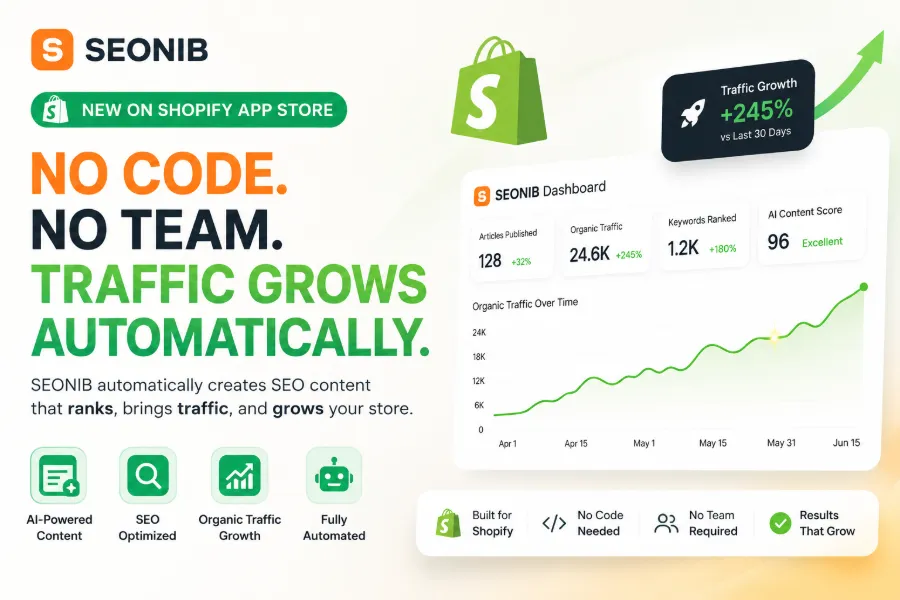
Shopline's Best SEO Tool Recommendation

Honestly, at first I was about to give up on SEO. Hiring a writer costs three to four hundred per article; writing it myself? I’d count the hours each day to publish one, and after three weeks I couldn’t keep it up. The most frustrating part was the manual copy‑and‑paste: generate with ChatGPT, then paste into the Shopline backend, reformat, find images, fill in SEO info—each article took at least an hour. The traffic return was almost zero, and because the updates were irregular, search engines treated the site as inactive. Later I realized that the real hurdle in blogging isn’t “writing” but “writing consistently.” Something a human can never do, a machine can—provided the workflow is set up correctly.
The hardest part of writing isn’t putting pen to paper; it’s not knowing what to write before you start. I’d stare at the Shopline dashboard all day watching rankings, then stare blankly for ten minutes with no direction. Eventually I outsourced this painful step to an AI topic‑selection bot—SEONIB. It automatically monitors industry trends and competitors’ content, evaluates by search volume, and pushes 24 new topic ideas into my topic pool each day. I just glance at the recommendation list, click one, and it becomes a pending writing task. Compared to the previous endless scrolling of Trending topics with no clue, this saved me more than a lunch break’s worth of time.
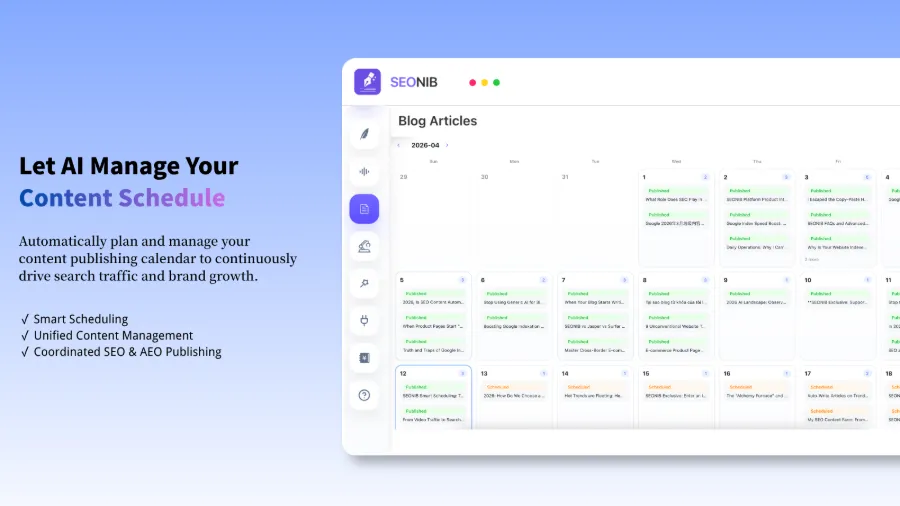
A common problem is that many people buy AI tools but can’t use them—AI gives a topic, but you still have to research what to write. SEONIB cuts the topic‑selection anxiety at the source; if you’re interested, check out this case story about “Trending Topics Letting AI Run First” here, which explains the logic.
From Keyword to Article, Only a Paste Away
Previously, turning video content into articles was exhausting. I’d download YouTube subtitles, translate them to Chinese, adjust the sentence order, add screenshots—writing an article was more painful than creating original content. Now I can throw anything in: a keyword, an Instagram post, even a competitor’s article link, and SEONIB automatically generates a complete SEO article. What surprised me most is that it also inserts internal links, images, and product cards automatically, with no manual adjustments needed.
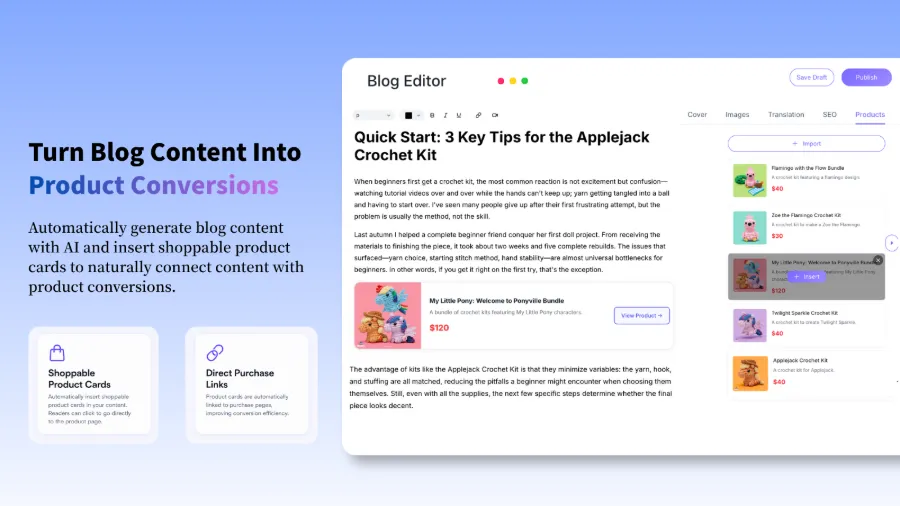
Language issues are solved, too. It supports automatic generation and translation in 40 languages. My Shopline store sells to the Southeast Asian market; previously, translating an article cost five hundred yuan, but now I just select the language and generate both Chinese and English simultaneously. For sellers like me with limited English, this feature eliminates an entire role.
See the guide on Quickly Generating Articles from Social Media Posts for a near‑foolproof workflow.
You Think Publishing Is Done? Automated Publishing Is the Real Relief
Many people think SEO requires “lots of content,” but search engines actually value “regular publishing.” Even two posts a week outperform a burst of twenty posts in a month. When I manually published, I learned this lesson—consistency for one or two weeks is fine, but in the third week, a busy schedule broke the rhythm. Search engines see “no recent updates” and traffic drops immediately.
After setting up scheduled publishing in SEONIB, it runs 24⁄7 automatically. I scheduled posts for Tuesday, Thursday, and Saturday at 10 am, and the content went out like clockwork, never missing a beat. Two months later, Google Search Console showed a roughly three‑fold increase in impressions. The true value of automation isn’t just “saving time,” but creating an “uninterrupted continuous action” that humans can’t sustain for three or six months, but machines can.
For detailed pricing and ROI, see the SEONIB Pricing Page. In fact, the monthly content cost is cheaper than hiring a writer for two articles. If you plan a bulk content strategy, check out the detailed guide “SEONIB Bulk Publishing to WordPress. Although the documentation mentions WordPress, the logic applies fully to Shopline.
Cross‑Platform Sync? I’ve Never Even Opened the Shopline Backend
What bothered me most was that every time I published an article I had to log into the Shopline backend, import, reformat, and click publish—sometimes even mis‑categorizing by mistake. After SEONIB handles those steps, the content can be synced with a single click to Shopline, WordPress, Shopify, and other platforms. I generate the content once, and it’s automatically pushed to all store backends. One generation, all covered.
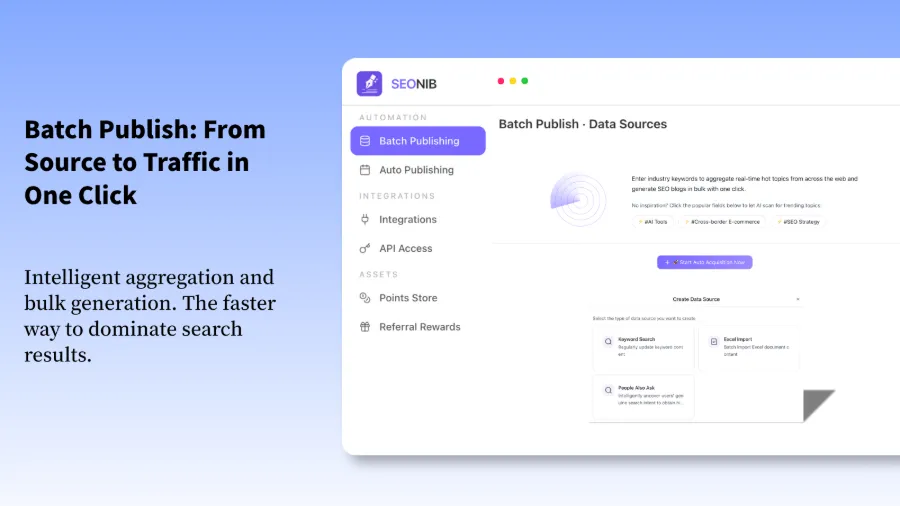
If you have multiple Shopline stores or also run Shopify, this sync feature’s value becomes crystal clear. Previously you had to log into each platform; now one system does it all. For setup, refer to the official guide on Connecting Third‑Party Websites; it takes only minutes to bind your Shopline account. Explore more bulk‑publishing tips for additional sync scenarios.
For me, SEONIB solved the biggest problem not “writing articles,” but “building an un‑failable content system.” It didn’t make me smarter than before; it just eliminated the need to manually fight laziness.
Frequently Asked Questions
Q: Is the setup process for SEONIB’s automatic publishing complicated?
A: Not at all. Log in, bind your Shopline store, set the publishing frequency (daily, weekly, or custom), and toggle the automatic publishing switch. After that, you don’t need to intervene—the system will select topics, write drafts, and push them on schedule.
Q: My store is on Shopline—can this tool really sync content directly?
A: Yes. SEONIB supports direct Shopline integration; just choose Shopline as the sync channel when publishing, and the article will be pushed to the store backend and go live without manual login.
Q: My store is just starting out with little content—can it still generate automatically?
A: Absolutely. New stores are perfect candidates for this automation—no existing articles are needed. The AI can start from scratch, generating the first batch of content based on your product info and industry keywords. We recommend running it for two weeks, then adjust the direction based on the traffic data.
Share Article