Stop Using Generic AI for Blog Writing! 5 Key Differences Between SEONIB and Traditional AI Writing Tools
Date: 2026-04-03 07:35:05
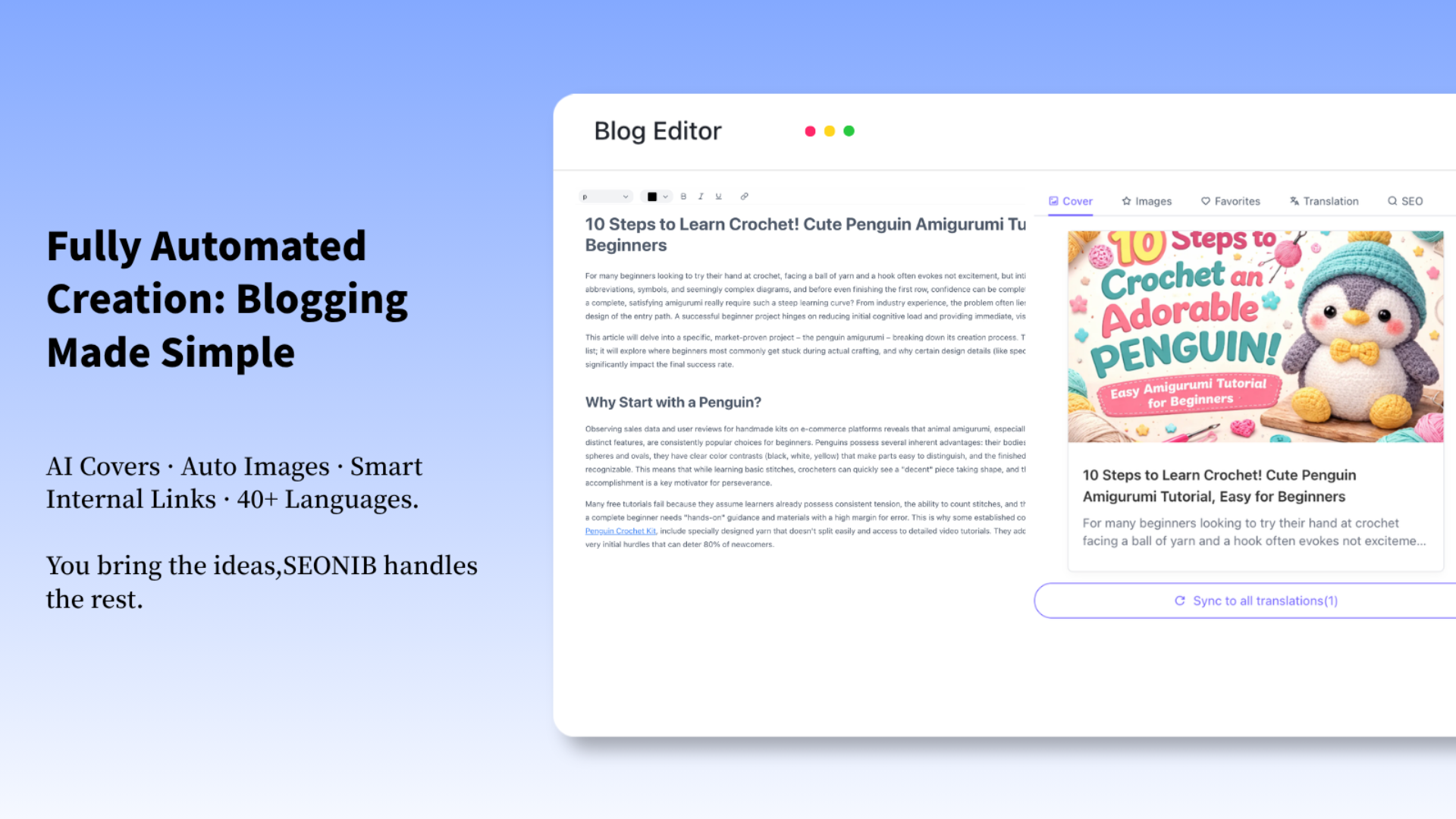
SEONIB is fundamentally different from “generic AI writing tools” like ChatGPT, Jasper, and Copy.ai. It doesn’t just “write an article” for you; instead, it provides an entire pipeline focused on the “SEO content automation process.”
Here’s a breakdown of its distinctions from typical AI writing tools across several core dimensions, to help you make an informed choice.
I. Different Positioning: Content Production Tool vs. Content Operations System
Generic AI Writing Tools (e.g., ChatGPT, Jasper, ArticleGenius):
- Primarily address the “writing” aspect: You provide a keyword or prompt, and it outputs one or more pieces of copy.
- You need to select topics, format content, copy-paste it to your website, and manually decide how many articles to publish and when.
SEONIB:
- Positioned as a “blog automation pipeline” or “SEO content operations system,” aiming to streamline your entire workflow from “topic selection → generation → editing → publishing → multilingual distribution” for scaled operations.
- Once you set up your information sources (keywords, PAA, Excel, product pages, video links), the system can generate and publish content in batches at a set frequency, approaching a “set it once, run it automatically long-term” model.
II. Richer Input Methods, Beyond Just “Asking a Question”
Traditional AI Writing Tools:
- Typically rely on “instructions + keywords,” such as “Write a 1000-word guide on ‘how to choose solar garden lights’.”
- Information sources are relatively limited, mainly dependent on manual prompt writing.
SEONIB:
- Supports multiple input sources. The official claim is “generate SEO blogs from various sources like trending topics, keywords, product pages, social media posts, and reference links.”
- For example:
- Input a TikTok or YouTube video link, and it directly transforms into a structured blog post.
- Use a product page URL or an Excel keyword list as an information source to generate a complete set of SEO content.
- Ideal for e-commerce businesses and independent websites with existing content ecosystems (videos, product pages, competitor articles), eliminating the need to start prompts from scratch.
III. Built-in “SEO Content Pipeline,” Not Just “Writing an Article”
General AI Writing Tools:
- Output “text drafts.” Whether SEO is incorporated (titles, meta descriptions, structure, internal linking) is entirely up to you; the tool itself is not responsible.
- You need to perform SEO optimization and distribution externally, leading to a fragmented process.
SEONIB:
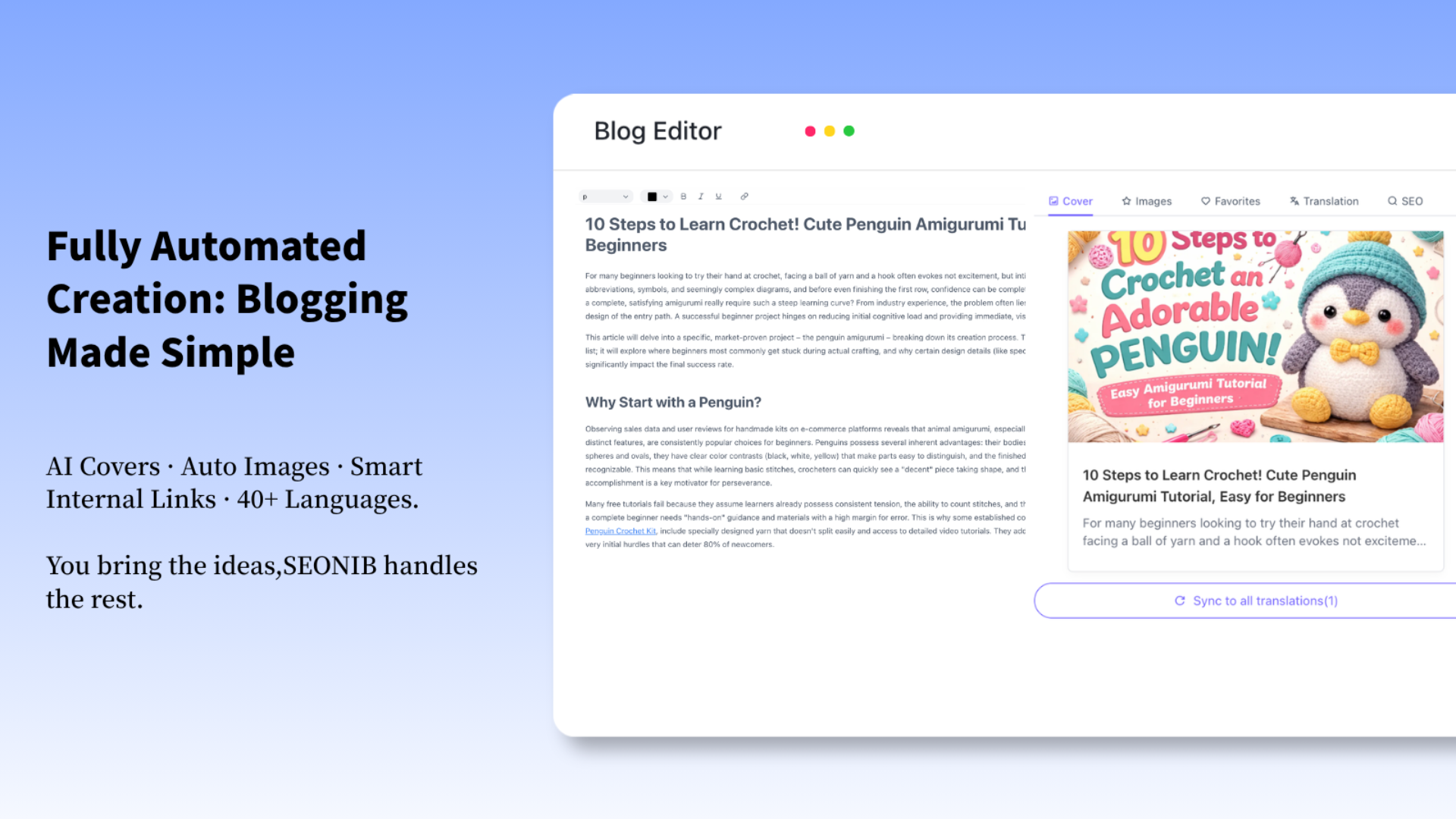
- Designed from the ground up for “rankable blogs.” Generated content includes structure, H2/H3 tags, and Meta Titles/Descriptions, making it suitable for direct use on SEO pages.
- Simultaneously integrates:
- Batch generation (from 1 to dozens of articles at once).
- Batch publishing (to CMS like Shopify, WordPress, Shopline, with options for scheduled publishing, e.g., automatically publishing 3 articles every day at 9:00 AM).
- For you, it functions more like an “SEO content pipeline” rather than a “single-point writing plugin.”
IV. Multilingual Capabilities + Automated Publishing, Ideal for Cross-Border E-commerce Sites
Generic AI Writing Tools:
- Can handle translation and multilingual content, but it’s typically a “manual process”: generate an English draft, then have AI translate it into other languages, and then manually copy each version to different language sites. This is prone to errors and difficult to scale.
SEONIB:
- Claims to support 40+ languages and can generate multilingual content. It directly pushes multilingual versions to corresponding sites through the system, achieving “one input, synchronized multilingual growth.”
- For independent websites targeting multiple national markets (e.g., English, German, Spanish, Japanese), it can significantly reduce the time spent on manual multilingual writing and publishing, aligning with an “SEO content matrix” strategy.
V. Different Integration with Your Existing SEO System
Traditional AI Writing Tools:
- You conduct keyword research using Ahrefs/Semrush/GKP, then manually write prompts, generate content, and manually publish. The entire process is manually connected, making standardization difficult.
SEONIB:
- You use “keyword lists, PAA questions, trending keywords, product pages, and social media videos” as “input information sources” for SEONIB to generate content in batches.
- After generation, you track performance using Google Search Console + GA, feeding the data back into your SEO strategy, creating a “input → output → data feedback” loop.
- The official emphasis is that it’s not a “magic traffic switch” but a tool to “reduce manual labor, increase content production capacity, and improve localization efficiency.” Strategic design of content structure and quality standards still requires human input.
VI. In a Nutshell: What Should You Expect From It?
You can understand the difference between SEONIB and other AI writing tools like this:
- If you need a tool for “flexible writing of various copy, rewriting, polishing, and creating social media content” → Choose generic AI writing platforms like ChatGPT.
- If you need an “entire content pipeline that automatically transforms keywords, videos, and product pages into rankable SEO blogs, publishes them in batches to Shopify/WordPress/Shopline, supports multiple languages, and is suitable for cross-border e-commerce” → SEONIB will better meet your needs.
分享本文