2026, The Silent Revolution in SaaS Standalone Content Operations: From Tool Integration to AI Agent Full Management
As time enters 2026, a phenomenon is becoming increasingly common within the SaaS community: more and more people are no longer satisfied with merely relying on LinkedIn or industry media, but are actively managing their own standalone content sites – whether it’s a personal brand blog or an information hub as a product supplement. While the demand for traffic diversification and brand asset accumulation drives this trend, the deeper reason is a fundamental transformation in the infrastructure of content production and distribution. We are experiencing a silent revolution, moving from “tool integration” to “automated pipelines,” and finally towards “AI agent full management.”
The Ceiling of Tool Integration and the Pain of Operations
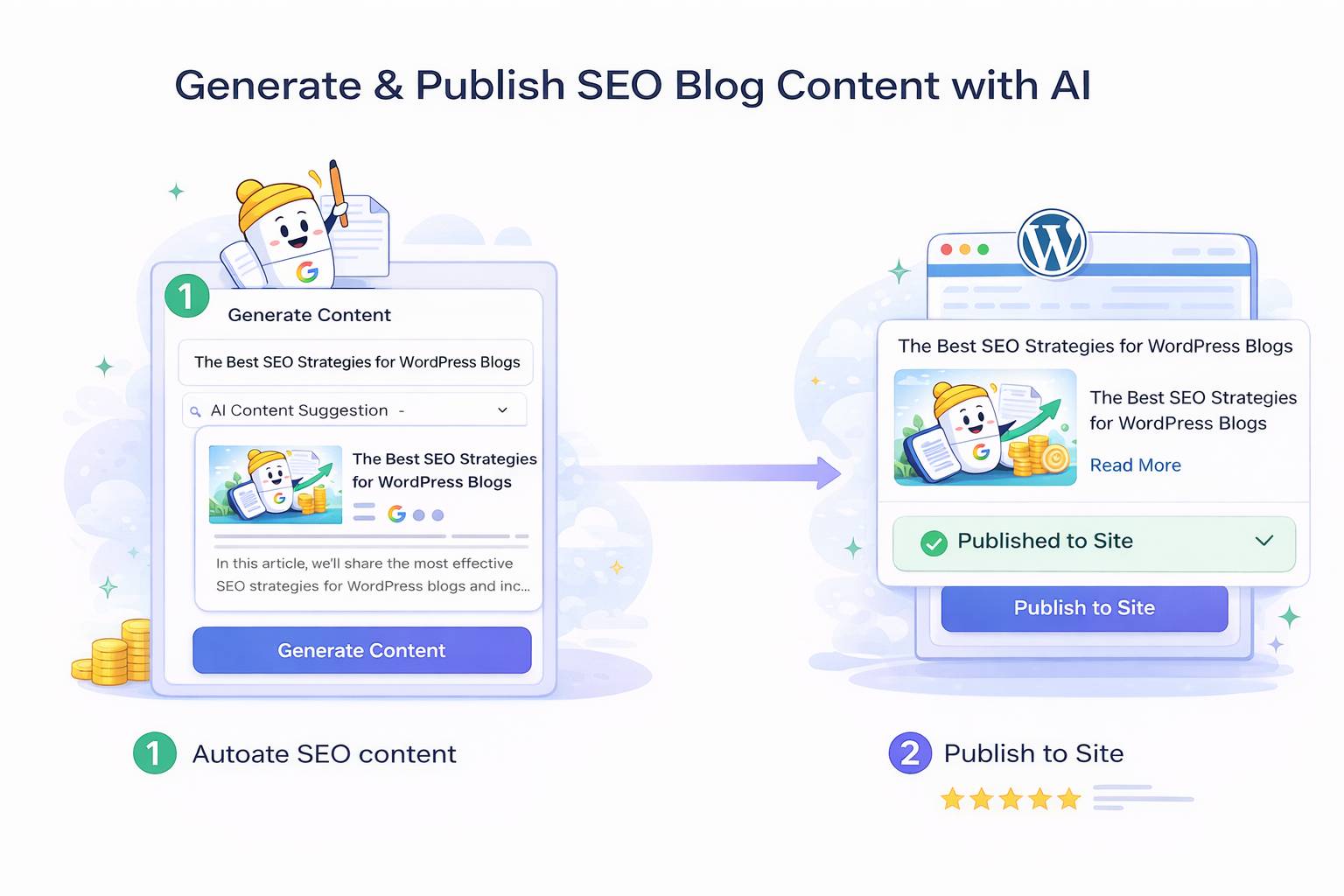
About three years ago, the paradigm for content operations in the SaaS field was clearly defined by a “tool stack” mindset. We would meticulously select a set of tools: one for keyword research, one for content formatting, a grammar checker like Grammarly, and then use Zapier or Make (formerly Integromat) to automatically publish written articles to the blog modules of WordPress or Shopify. This workflow indeed improved efficiency, shortening the cycle from draft to上线 (going live) from days to hours.
However, the pain points of this model quickly became apparent. Firstly, it essentially connects multiple manual steps with automation, where each node still requires manual triggers or decisions. Keywords need manual digging, outlines need manual conception, and even “automatic publishing” only saves the step of clicking the publish button at the end of the process. Secondly, the maintenance cost of tools is high. Each tool has its own learning curve, subscription fees, and compatibility issues arising from updates. When Shopify updates its API, or WordPress changes its theme, the entire workflow can be interrupted, requiring technical intervention for troubleshooting. More importantly, this model is not scalable. The number of “automated workflows” one operator can manage is limited, and the ceiling for content output is clearly visible.
From Pipelinization to Agent-ization: The Migration of Workflow Paradigms
The real turning point came with the emergence of the “pipeline” thinking. Instead of pursuing the ultimate functionality of individual tools, content is viewed as a complete, end-to-end assembly line, from “signal input” to “CMS上线.” This assembly line requires several core capabilities: multi-source content generation, batch processing capabilities, and deep native integration with the CMS.
Taking our team’s own practice as an example. Last year, we started using a blog automation pipeline called SEONIB. Its design philosophy embodies this paradigm shift. It’s not an isolated writing tool, but a system that encapsulates “signal capture - content generation - multi-platform publishing.” You can set industry trend keywords to track in the backend, or directly drop in a link to a competitor’s product page. The system monitors these signal sources 24 hours a day, and once it captures a valuable topic, it automatically activates the content generation engine to produce SEO-optimized complete blog articles (including titles, body text, images, and meta descriptions), and then publishes them directly to our linked Shopify store blog through pre-configured connections.
The most crucial experience of this process is “de-humanization.” We no longer need to log into different platforms and switch between different interfaces. All operations are completed on one panel, and published articles automatically appear in the “Blog Posts” list in the Shopify backend, with images also stored in the Shopify media library. This solves the biggest pain point of the tool integration era – context fragmentation and maintenance burden.
AI Agent Full Management: Redefining the Role of Operations
When the pipeline becomes stable and intelligent enough, the next step is the “agent” model. AI is no longer just a tool for executing commands, but an agent endowed with certain goals (e.g., “maintain weekly updates of 5 industry trend articles on the blog”) and permissions. It works autonomously and continuously optimizes.
For example, on platforms like SEONIB, you can create an “auto-publish” task. You set the signal sources (e.g., a few core keywords and competitor websites), choose the publishing frequency and target platform (your Shopify site), and then click start. From then on, this AI agent works 24⁄7: monitoring trends, judging topic heat, generating content, scheduling publication times, executing publishing, and reporting cumulative output on a dashboard. As an operator, your role shifts from “operator” to “strategy maker” and “performance supervisor.” You focus more on whether the signal source settings are accurate, whether the style and quality of the generated content align with the brand’s tone, and ultimately, the search traffic and conversion data.
This transformation is particularly revolutionary for SaaS entrepreneurs and small teams. It means that even without a dedicated content team, a professional, active, and continuously updated content site can be maintained, building a stable entry point for search engine traffic. Content operations transform from a high-cost, “labor-intensive” job into a predictable, scalable, and manageable “technology-driven” asset.
Practical Considerations: Integration, Quality, and Brand Tone
Of course, embracing automation is not a one-time fix. In nearly a year of practice, we have also accumulated some key insights:
- Depth of Integration Over Breadth: Stable and seamless integration with the CMS is crucial. Early on, we experimented with some tools connected via RSS or rudimentary APIs, which often resulted in garbled formatting or publishing failures. Now, we place more importance on deep integrations like SEONIB’s with Shopify, which offer official app authorization and direct read/write access to the blog API. This ensures the entire chain from generation to publishing is controllable and unaffected by changes to the store’s front-end theme – as confirmed in its documentation, the connection is based on API permissions, and changing themes does not affect content delivery.
- Shifting Quality Control Upstream: The core of AI-generated content quality lies in “prompts” and “source materials.” You cannot expect to get high-quality articles by simply giving it a vague keyword. Our experience is that by providing high-quality “sources” – such as a link to an in-depth industry report or an excellent competitor’s product page – AI can often generate more insightful first drafts. At the same time, setting up content review stages (even sample reviews) or strict style guides within the pipeline is a necessary step to ensure brand tone.
- From Content Pipeline to Growth Engine: Once the basic content production and publishing are automated, the core value of the operator shifts to the strategic level: How to use content to map out core topic clusters? How to leverage multi-language automatic generation capabilities to explore global markets? How to analyze the traffic brought by automated content and feed it back into product iteration and customer success? Content automation pipelines truly unleash human potential, allowing us to focus on higher-value growth logic.
Conclusion
In 2026, the competition in SaaS standalone content operations is no longer about who has the coolest tools, but about who can build a more efficient, intelligent, and robust automated content supply chain. The core of this silent revolution is to liberate operators from repetitive, mechanical labor and return them to the essence of strategy, creativity, and connecting with users. From tool integration, to pipelinization, and then to AI agent full management, we see not just a curve of efficiency improvement, but a path of redefinition for the value of operators. In the future, perhaps the “content operations” role itself will be redefined, and “strategy architects” who can skillfully manage these automated agents will become the new core competency.
FAQ
Q: Will directly publishing AI-generated content to a standalone site affect the website’s SEO reputation or ranking? A: This depends on the content quality. Modern search engine algorithms (like Google’s) focus more on content value and user experience, rather than the production method itself. As long as the AI-generated content is unique, informative, and addresses user search intent, it can achieve good rankings. The key is to provide clear instructions and high-quality source materials, and it is recommended to conduct necessary manual review and optimization to ensure the content adheres to E-E-A-T (Experience, Expertise, Authoritativeness, Trustworthiness) principles.
Q: How do automated content pipelines handle synchronized updates for multilingual sites? A: Advanced automation platforms typically have built-in multilingual generation capabilities. In the generation task settings, you can select multiple target languages at once (e.g., English, Chinese, Japanese). The system will generate localized versions based on the original text, tailored to local language habits and cultural contexts, and can publish them simultaneously to different regional websites or multilingual versions of the same site, greatly simplifying the complexity of global content operations.
Q: If my content strategy needs to cover video summaries or podcast transcripts, can these automated pipelines handle them? A: Yes, this is precisely the embodiment of multi-source content generation capabilities. In addition to keywords and web links, many automation pipelines (like SEONIB) support inputting YouTube video links or podcast audio links as content sources. The AI will automatically transcribe audio and video content, analyze core viewpoints, and generate structured blog posts or key point summaries accordingly, greatly expanding the sources of content material.