Google AI Mode Self-Referencing Surges 3×: SEO Strategies Must Be Reassessed

The search traffic data from the first quarter of 2026 gave many e‑commerce operators a real chill. A repeatedly verified phenomenon is reshaping the entire SEO ecosystem: the self‑referencing rate of Google AI Mode has grown by more than 300% in just six months. This isn’t a minor parameter tweak in an algorithm update; it’s an unprecedented feedback loop between the search engine’s own content‑generation mechanism and its ranking system—Google is increasingly citing its own generated summary content, while exposure opportunities for traditional original pages are being systematically compressed.
What does this mean for independent e‑commerce sites that rely on search traffic? In short: the old playbook of ranking through original product reviews, buying guides, and keyword stuffing is losing its effectiveness. AI Mode no longer directs traffic to external sites as it once did; it completes the information loop within its own answer box. Users’ click behavior shifts from “browsing multiple pages” to “reading and leaving,” truncating the conversion funnel already at the search stage.
When Search Engines Start Eating Their Own Exhaust
The core of the issue isn’t complicated, but its impact chain is deep. When generating answers, Google AI Overviews now cite sources from Google’s own Knowledge Graph and AI‑generated summaries at a rate that rose from about 8% in mid‑2025 to over 32% in early 2026. In other words, one out of every three cited sources is something Google created itself.
It sounds like an internal efficiency optimization, but for e‑commerce sites it directly erodes the most valuable resource—click allocation in search results. When users get the full “Top 10 Treadmills Compared” information inside the AI Mode summary box, they have no reason to click through to your three‑day‑crafted deep‑dive review. Traffic isn’t just diluted; it’s being absorbed outright.
A data point worth revisiting: an outdoor‑gear e‑commerce site with roughly 400 K monthly visits saw a 47% drop in search traffic for comparative keywords like “best hiking shoes” between September 2025 and February 2026. During the same period, the display rate of Google AI summaries for those keywords jumped from 22% to 71%. This isn’t coincidence; it’s a structural redistribution of traffic.
But the real problem isn’t how much Google cites itself; it’s that the proportion is accelerating. Monthly tracking data keeps pushing the ceiling higher, and strategies that were viable three or four months ago may already be obsolete.
The Real Damage Path of AI Self‑Referencing for E‑commerce SEO
To grasp the severity, you must look beyond raw traffic numbers and see which user intents are being cut off. E‑commerce search traffic typically falls into three categories: navigational (brand name), informational (“how to choose”), and transactional (“buy” or “discount”). AI Mode’s self‑referencing hits hardest on informational searches—the very source of traffic that product reviews, buying guides, and category pages depend on.
When AI Mode directly generates a “2026 Best Noise‑Cancelling Headphones” list in its summary box, it isn’t just providing an answer; it’s replacing the entire comparison and decision‑making process. Users no longer need to open five tabs to compare specs, scroll to the middle of a page for your evaluation table, or even see any ads.
A concrete test scenario illustrates the issue: a beauty‑commerce site’s “dry‑skin foundation recommendations” page ranked 3rd on the homepage before August 2025, averaging about 12 K clicks per month. By January 2026, the page was still 4th on the homepage, but average monthly clicks fell to 3,800. The page didn’t change, the ranking didn’t drop, but the AI summary box now occupies the top half of the search result, completely rewriting the user interaction path.
This model hits content‑driven e‑commerce sites especially hard. Sites that rely on product‑catalog content, aggregated user reviews, and UGC posts find that their content is indexed and ranked, yet no one clicks. Impressions may still be rising, but click‑through rates plunge.
Why Traditional Content Strategies Are Failing—And It’s Irreversible
Many SEO practitioners try to fight back with old tactics: deeper content, richer structured data, stronger EEAT signals. Those efforts aren’t wrong, but they’re entering a stage of rapidly diminishing marginal returns. The reason is that AI Mode’s self‑referencing isn’t a bug in the ranking algorithm; it’s a controlled product decision. Google’s goal is shifting from “connecting users with information” to “providing information directly,” because only then can it keep users on the search results page and reduce bounce.
This shift is fundamentally damaging to e‑commerce sites. No matter how good your content is, you’re just feeding the AI mode training material. A page gets crawled, understood, summarized, and the user’s attention stops on the search results page. Content becomes fuel for the search engine, not a traffic inlet for your store.
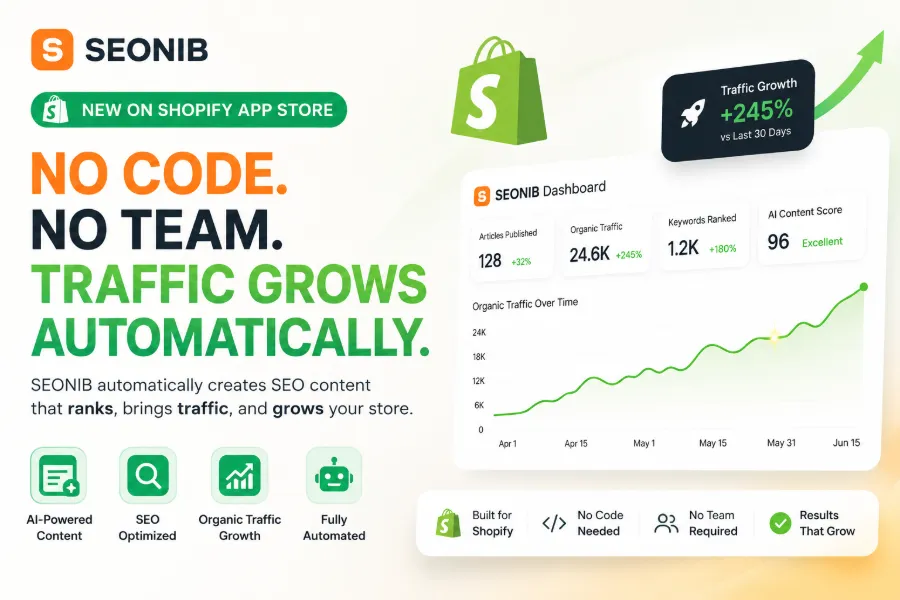
Facing this reality, a natural response is: if your content is destined to be digested and rewritten by the AI system, automate that process and focus your effort on areas where AI still needs external data sources. That’s why more e‑commerce teams are integrating content production pipelines with automation tools. For example, when deploying a content pipeline, operations teams may use platforms like SEONIB to combine trend discovery, content generation, and publishing into a fully automated workflow. This isn’t about replacing editors; it’s about freeing human resources from the “keyword chase” loop and concentrating on strategy.
Specifically, when AI Mode’s interception rate for informational searches reaches a tipping point, the ROI of manually writing deep reviews falls below that of an automated “breadth‑coverage” strategy—using high‑frequency, multi‑angle content to cover long‑tail searches that AI still relies on external citations for. This strategic shift is precisely where automation tools demonstrate their greatest value.
Reassessing Traffic Acquisition Model: From “Ranking” to “Being Cited”
SEO strategies in 2026 must accept a premise: the ceiling for click‑through rates on SERPs has lowered, and this trend is irreversible. Purely chasing the #1 rank is no longer enough. You need to consider whether your content can still gain exposure under AI Mode—not as a target for user clicks, but as a source for AI‑generated answers.
This shift manifests in several concrete signals: first, structured data and schema markup have moved from “nice‑to‑have” to “must‑have.” Without clear FAQ, Product, and HowTo schemas, the probability that AI correctly extracts your page content drops dramatically. Second, summarizability becomes more important than depth. AI prefers clearly structured, bullet‑pointed text with explicit conclusions. Vague paragraphs, unsupported claims, and pages without a clear answer have a very low chance of being cited.
Third, and most crucial: publication timing and update frequency directly affect citation rates. AI Mode tends to cite newer content, even if an older article contains a better answer. Therefore, maintaining a steady content production rhythm is no longer just about covering more keywords; it’s about preserving citation priority.
A real‑world team example illustrates this operational shift: they found that manually sustaining a weekly output of 15 articles exhausted three staff members, while each article’s search traffic was declining. They pivoted, moving the core editorial team’s focus from “writing articles” to “defining content templates and knowledge‑graph structures,” and handed actual generation and publishing to an automation system. During this transition, SEONIB became the main execution layer of their content pipeline, handling everything from keyword clustering to multi‑platform publishing. After iteration, their weekly article count rose from 15 to over 60, and AI‑mode citation frequency grew 2.7× within three months. This growth wasn’t due to a leap in content quality, but to the combined boost from higher publishing frequency and richer structured data, which increased systemic weight.
Abandon the Fantasy of “Waiting for Traffic”: Automation Must Be Front‑Loaded
In the context of AI Mode’s self‑referencing, the most dangerous mindset for e‑commerce SEO is “just wait for Google to send traffic.” History shows that when search engines evolve from traffic distributors to information terminators, any passive‑waiting traffic model accelerates its own demise. Traffic acquisition in 2026 must shift from “being found” to “being proactively pushed to potential customers.”
This means two things: first, your content production speed must match the AI system’s information‑digestion pace. Second, your traffic ecosystem can’t rely solely on SERPs; it must form a complete automated chain from content creation to publishing to outreach. The latter is the real defense against the “self‑referencing trap.”
A clear, uncomfortable fact is that the AI self‑referencing ratio will not decline; it will rise. You can’t stop Google from citing its own content, but you can become a high‑frequency external source that gets cited. To achieve this, you need a paradigm shift in content production—from a few manually crafted pieces per week to dozens of automatically generated pieces per day. In this model, you don’t need another writing assistant; you need a system that can manage the entire content lifecycle. SEONIB’s value in e‑commerce scenarios lies exactly here: it turns content from “creative production” into “systems engineering.” From trend discovery to multilingual generation to multi‑platform publishing, once the pipeline is set up it can run continuously without human intervention. For resource‑constrained e‑commerce teams, this isn’t a luxury feature; it’s a survival strategy for maintaining a baseline of traffic.
FAQ
Does an increase in AI Mode self‑referencing mean my site’s traffic will definitely drop?
Not necessarily; it depends on your traffic structure. If your site mainly relies on informational searches (reviews, guides, comparative keywords), the likelihood of a traffic decline is high. If your traffic comes primarily from brand and transactional searches, the impact is smaller. The key is how often your content is cited in AI summaries—if it is cited, brand exposure may actually increase, but click‑through conversion will decrease.
How can I tell if my site is being affected by AI self‑referencing?
Track two data sets: (1) the growth rate of “impressions but not clicks” in Search Console, and (2) the click‑through rate change for core informational keywords. If impressions stay stable or rise while CTR falls more than 15% for three consecutive months, you’re likely under AI Mode influence. Another verification method is to screenshot the Google SERP and see whether the AI summary box is covering your result.
Is optimizing structured data really useful against AI self‑referencing?
Yes, but the effect accumulates over time. Structured data makes it easier for AI to recognize and extract your content, increasing citation probability. However, simply adding schema tags does not guarantee citation; content relevance, freshness, and authority remain decisive factors. Prioritize accurate and complete Product, FAQ, and Article schemas.
Can a small e‑commerce team resist AI Mode’s traffic erosion?
Yes, but you need to shift strategy focus. The core idea is to move from “pursuing deep ranking for individual articles” to “pursuing broad content coverage.” Automation tools can boost output frequency and breadth, significantly raising the chance of AI citation. Also, allocate part of the budget from content creation to multi‑channel distribution to reduce reliance on a single search channel.
Do automated content tools really help cope with AI Mode changes?
The core value of automation tools isn’t “writing articles”; it’s “maintaining a continuous citation priority.” AI Mode tends to cite the most recently published external content, so frequent updates markedly improve citation odds. For teams with limited resources, automation is an effective way to free human effort from repetitive tasks, allowing focus on strategic decisions and quality control, but it cannot replace strategic judgment or content quality oversight.
Share Article