Master Cross-Border E-commerce SEO? Start with SEONIB
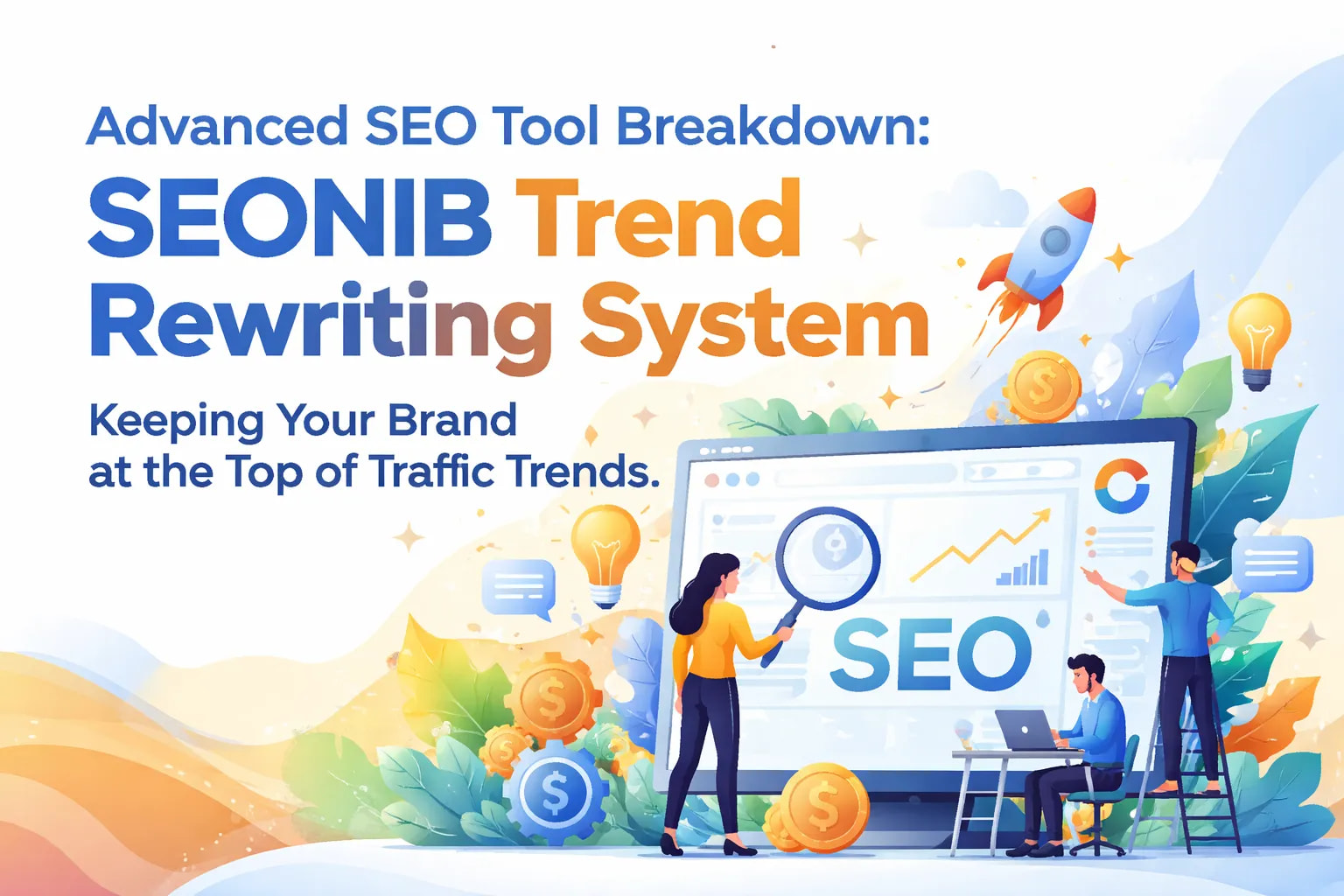
The core value of SEONIB for cross-border e-commerce SEO is transforming your “write and publish one by one manually” long-form content into an automated workflow of “keyword → article → auto-publish → multilingual distribution,” helping you quickly build a large volume of rankable SEO blogs and content pages.
I. Core Scenarios for Using SEONIB in Cross-Border E-commerce SEO
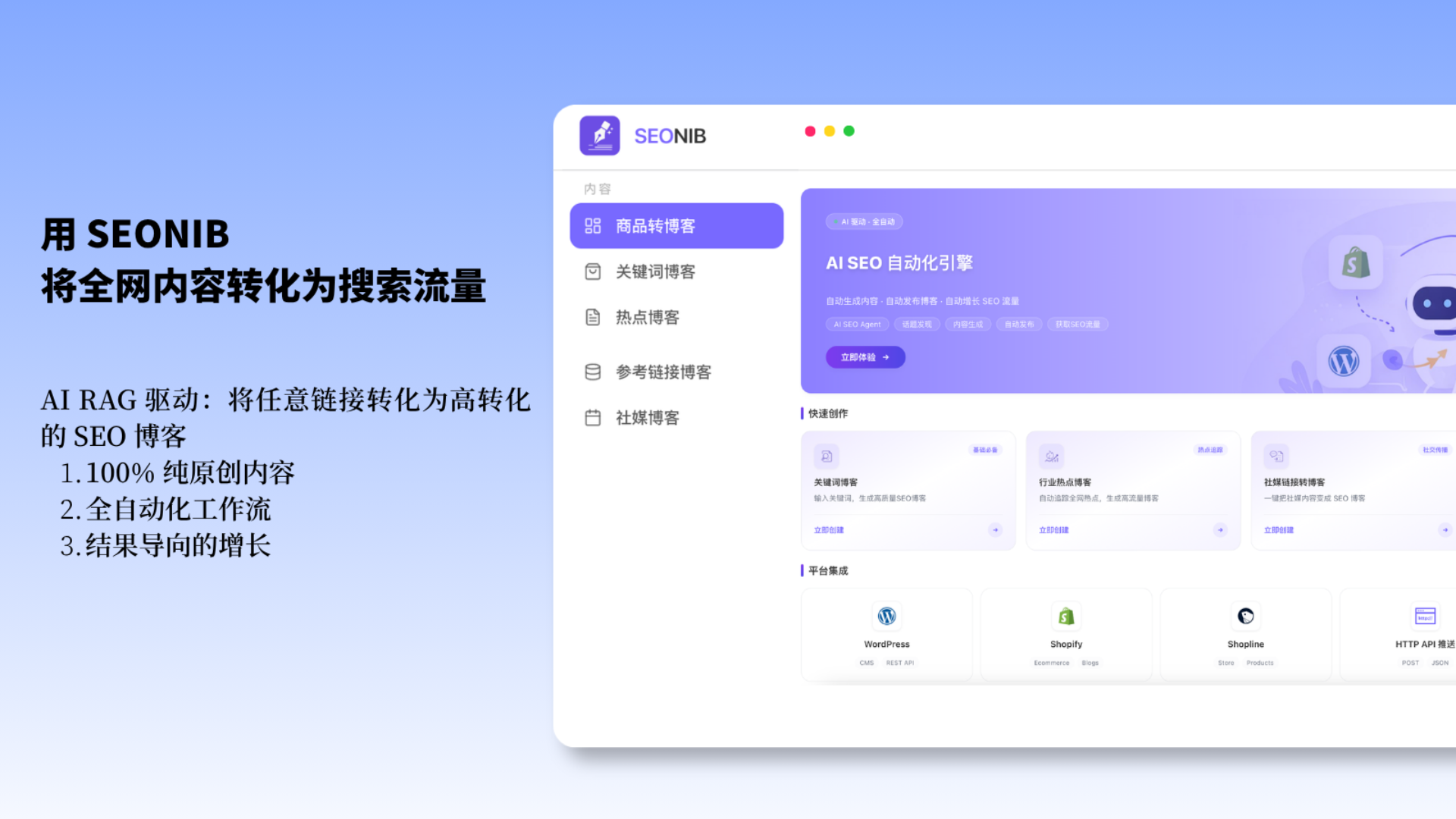
1. Keyword-Driven Content Matrix
- You can directly feed keyword clusters extracted from Ahrefs / Semrush / Google Keyword Planner into SEONIB for “keyword-driven” mode:
- One core keyword (e.g., “solar garden lights for backyard”) corresponds to a complete long-form article, including title, H2/H3, introduction, body, Meta Title / Description.
- Supports template selection, such as “review article,” “tutorial article,” “TOP list article,” suitable for creating SEO conversion content like product comparisons, usage guides, and buying guides.
2. Localization of Hot Topics and Competitor Content
- Input industry terms or competitor article URLs, and SEONIB can:
- Automatically capture the latest trends and industry news, then rewrite them into long-form articles with your brand information, reducing the difficulty of coming up with topics from scratch.
- Use the “deep rewrite with reference links” feature to rewrite high-quality English industry articles, buyer guides, and reviews into your own SEO content, avoiding direct plagiarism while preserving semantics and structure.
3. Video Content to Long-Form SEO Articles
- Drop in links to your product videos or recommendation videos from platforms like TikTok, YouTube, and Instagram. SEONIB can:
- Automatically parse video content and generate structured long-form articles, suitable for “product use case articles” or “customer case studies,” which can then be published on your independent website to drive social media traffic back to SEO. sohu+1
II. Specific Usage in Cross-Border Multilingual Websites
SEONIB supports 40+ languages, making it ideal for covering multiple country markets.
1. One Primary, Multiple Languages: Multilingual Content Around the Same Set of Keywords
- After generating the primary English article, use SEONIB’s multilingual feature to:
- Translate it into French, German, Spanish, Japanese, etc., with a single click, while maintaining consistency in Meta Title / Description and keyword structure.
- Adapt to local search habits (e.g., regional differences in word usage, like “face cream” vs. “moisturiser”), followed by minor manual adjustments, to reduce the cost of multilingual writing for your team.
2. Small Language Market “Gap Filling” Strategy
- Many small language markets (e.g., Netherlands, Nordics, Eastern Europe) are content-scarce. SEONIB can:
- Use English / general content to batch generate 3–5 small language pages, targeting long-tail keywords with low search volume but low competition, forming a “long-tail encirclement” strategy.
III. Integrated Usage with E-commerce Platforms and Independent Websites
SEONIB can directly integrate with common website building systems, solving the problem of “can’t publish after writing” or “too slow to publish.”
1. Batch Automatic Blog Publishing
- Supports CMS like Shopify, WordPress, Shopline, etc. You can:
- Generate 20–50 SEO blog posts related to your products at once and automatically push them to the “blog section” of the corresponding site, eliminating manual copy-pasting and image uploads.
- Use the scheduled publishing feature to ensure continuous content updates weekly/monthly, maintaining website “activity” and freshness for search engines.
2. Content Layering with Product Pages
- Use SEONIB to create long-form articles for high-potential products, such as:
- Product usage guides, installation tutorials, comparison buying guides, and scenario case studies. These articles can then link to product pages, boosting the SEO weight of the entire product line.
- Simultaneously adapt to basic On-Page SEO requirements: title includes keywords, Meta description is clear, body structure is logical, and includes images with Alt text, adhering to Google Search Central’s basic SEO recommendations.
IV. The Right Way to Collaborate with Other SEO Tools
SEONIB itself is not a “keyword research” tool; it’s best embedded as a “content production layer” in your SEO workflow.
1. Frontend: Use Ahrefs / Semrush / GKP for “Keyword Research”
- Use professional tools to:
- Filter by country market, search volume, and keyword difficulty.
- Extract “core category keywords + long-tail purchase keywords + content-type long-tail keywords.”
2. Mid-End: Use SEONIB to Generate “Rankable Content”
- Hand over the extracted keyword list to SEONIB to:
- Generate structured long-form articles in “keyword-driven mode,” setting the corresponding language and site.
- Use the AI editor and image system to add images, optimize layout, and increase internal links before publishing to your independent website.
3. Backend: Use Google Search Console / GA for “Performance Review”
- Use Google Search Console to see which articles are starting to get clicks, impressions, and rankings, and focus on optimizing landing pages for keywords ranking between 10th and 50th.
- Based on data analysis, feed high-performing content back to SEONIB to create “series articles on the same topic” (e.g., “advanced tutorials,” “buyer question collections”), forming content clusters to amplify SEO effects.
V. Practical Advice: How to Use SEONIB for Cross-Border SEO Projects
If you are currently working on a cross-border e-commerce independent website, you can follow these steps to start using SEONIB:
- Choose a product category and use Ahrefs / Semrush / GKP to select 30–50 keywords (including core and long-tail keywords).
- In SEONIB, use “keyword-driven mode” to batch generate corresponding long-form articles, using “review/tutorial/guide” templates, with each article being 800–1500 words, ensuring clear structure, bullet points, and subheadings.
- Use SEONIB’s multilingual feature to output 2–3 primary market languages first (e.g., English, German, Spanish), then manually optimize local expressions and keywords slightly. Through the automatic publishing function, push these articles to your Shopify / WordPress / Shopline site, link them to product pages, and monitor their performance for 1–3 months using Google Search Console + GA.
分享本文