No Ads: How My Shopline Store Leverages AI to Auto-Write Articles and Get Free Traffic?
In the first three months after taking over that Shopline store, I spent ¥12,000 on ads, but the ROI never reached the 1.2 threshold. Even more frustrating was discovering that overseas buyers had already changed their behavior—they now open their computers and, instead of clicking Google ads, they go straight to ChatGPT or Perplexity and ask “best running shoes for flat feet under $100.” If my product information doesn’t appear in the AI’s answer, that money is essentially wasted.
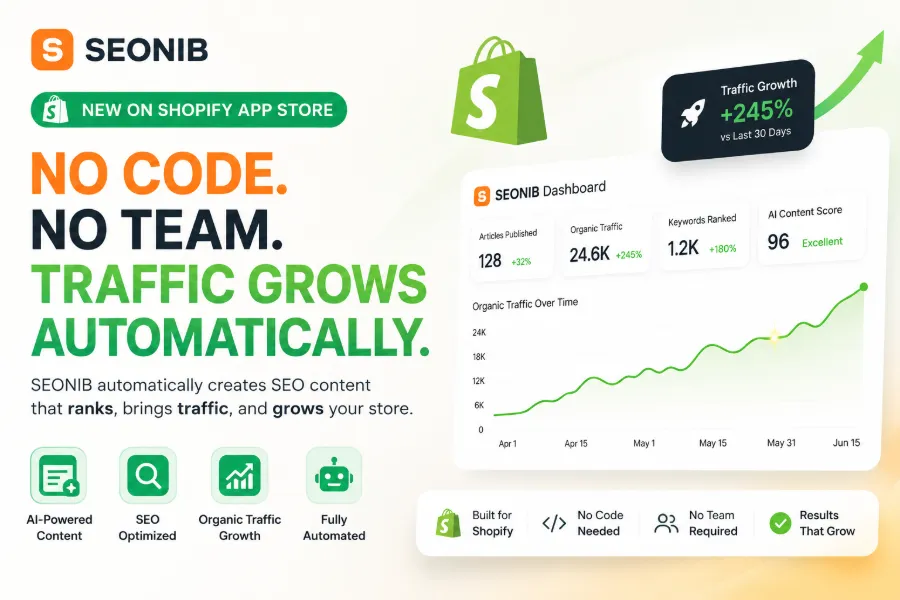
The cost‑effectiveness of traditional traffic acquisition is dropping, so I decided to try a seemingly lazy approach: let AI write SEO articles every day and automatically publish them to the store, 24⁄7. After three months, natural traffic quadrupled.
Traffic Dilemma: No Ads—What Else Can a Shopline Store Do?
Shopline sellers all know the feeling—when ads stop, traffic plunges. I was watching the Google Ads dashboard burn money daily, with average CPC climbing from ¥3 to ¥5, while the conversion rate stubbornly hovered just above 1%. In our peer group, everyone talked about “ROAS > 3 is a win,” and no one mentioned where free traffic could come from.
I know content marketing works, but manually writing blogs is too slow. From Monday to Friday I’d pick topics, gather data, write drafts, add images, and do SEO—each article took two days to finish, and after publishing it sat idle for half a month. Moreover, Shopline’s backend blog editor is clunky: no visual editor, no internal‑link suggestions, and inserting a product link required digging through the catalog for half a day. I couldn’t keep up the publishing frequency, and even when I did, the search rankings didn’t improve.
Then I realized something counter‑intuitive: content creation itself can be system‑driven. The only human judgments needed are (1) what’s worth writing about and (2) whether to publish after it’s written. The repetitive tasks—finding images, filling meta tags, adding internal links, adjusting formatting—are all mechanical. Since AI can write papers, letting it write a few blogs for me each day should be far easier than battling Google’s ad algorithm.
Industry data shows that sites that regularly update their blogs receive on average 67% more organic traffic than stagnant sites. If you’re a Shopline seller feeling lost about content strategy, start by checking out the strategy for leveraging SEONIB in marketing: https://seonib.com/c/guides/can-seonib-help-with-marketing-what-it-does-what-it-doesn-t-how-to-use-it-2026/index.html#s7.
First Step of the Content Flywheel: Let AI Find Worthy Topics for Me
My initial problem was “don’t know what to write.” I spent four hours scrolling social media, reviewing competitor blogs, and monitoring keyword tools, only to collect three lukewarm topics—already exhausted by competitors.
I didn’t need a writer; I needed a market‑sensing system that never sleeps.
AI‑driven trend monitoring does exactly that. It scans industry hot spots daily, identifies gaps in competitor content, evaluates keyword search volume, and pushes promising topics straight to me. No more guessing what will go viral; I just pick from the task pool each night.
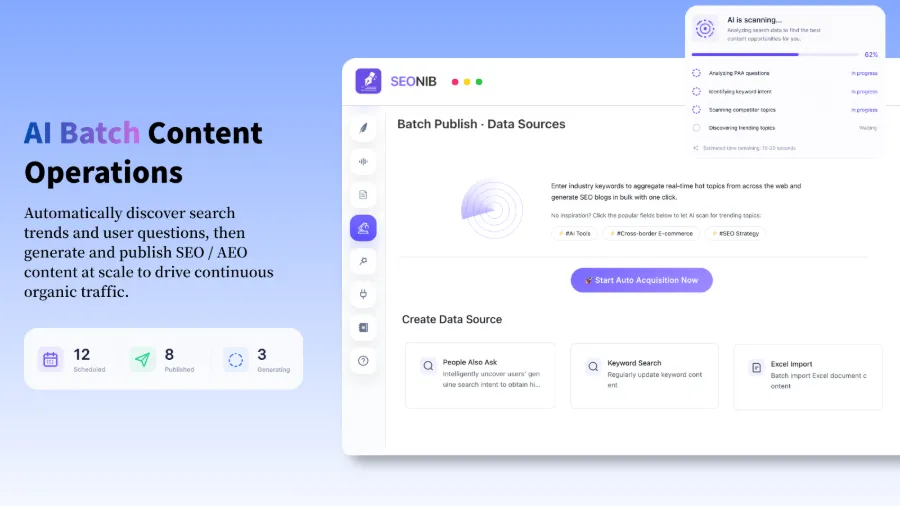
After setting up a few keyword sources (main product line, long‑tail terms, industry trends), the system delivers more than 24 new topic suggestions per week. Some topics I’d never thought of—like “how to clean hiking shoe laces”—are absurdly specific long‑tail queries that receive over 300 searches per month, and the corresponding article ranked 8th on Google’s homepage within two weeks of publishing. Human research would never have uncovered these.
Automated Writing: From Keyword to SEO Article While I Sip Coffee
Once the topic is confirmed, the real time‑saver is the generation stage.
There’s a dedicated article on this conversion logic—“Turning a product link into a sustainably sourced natural‑traffic SEO blog” (https://xie.infoq.cn/article/b542f50b346275caa59ce63c9)—that highlights a point I strongly agree with: good automated writing isn’t about stuffing keywords; it’s about structuring information. I just feed in a keyword or product link; the system automatically handles the structure, paragraphs, SEO meta description, internal links, and images.
In practice, using SEONIB (https://www.seonib.com) I input a product link and, within seconds, a review article with a product card appears. A 1,500‑word article goes from zero to finished in an average of 2 minutes. No manual title tags, no fuss over h2 vs h3— the system provides a search‑engine‑friendly article structure out of the box. If you’re unfamiliar with SEO article writing, see the simple blog writing guide: https://seonib.com/help/30/Blog%20Writing%20Made%20Easy, which explains the structural differences between automated and manual writing.
What surprised me more was multilingual support. My store mainly targets the U.S., but I occasionally get German and French customers. The system supports 40 languages; with one click, the same article is automatically translated into three language versions—translation quality is slightly lower than DeepL, but the SEO structure is fully retained, so I can publish without further editing.
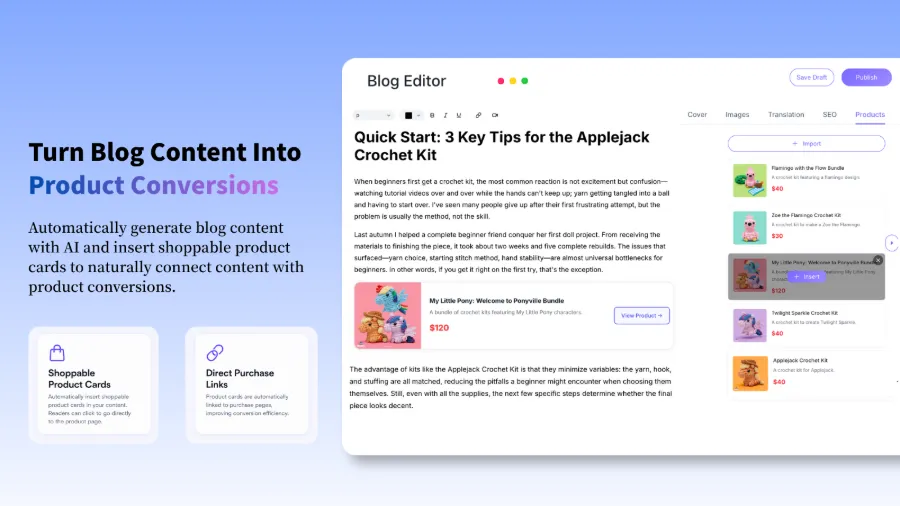
Product cards are another reason I keep this system. When AI generates an article, it automatically identifies which products to insert and embeds purchase‑link cards right after the relevant mention—e.g., when a reader sees “recommended waterproof backpack,” the card appears in the next paragraph, reducing the path from article to cart. For more configuration details, see the SEONIB help docs: https://seonib.com/help.
The only thing to watch out for is homogenization. After spending half an hour configuring a brand knowledge base—adding brand tone, common terminology, and a blacklist of forbidden words—every generated article adopts a consistent style, avoiding the disjointed feel of one article sounding like an expert and the next like a customer service rep.
Bulk Publishing & Multi‑Platform Sync: One Setup, Ongoing Operation
Writing content is only the first step; publishing is the real start. I heard this phrase many times in the first three months, but I only felt its weight after I set up automated publishing.
Below is a demo of how to sync a blog from the system to Shopline. The whole process takes about ten minutes the first time—not ten minutes per article, but a one‑time configuration. After setting the publishing frequency, SEONIB automatically generates and publishes articles on schedule. I chose a cadence of five articles per week, Monday through Friday, and the system produces 22 blogs per month on average. Once configured, I no longer need to log in daily; I occasionally check the backend content calendar to confirm next week’s articles are on track. SEONIB’s content calendar supports preview, allowing manual title or content tweaks before publishing—but I find those adjustments becoming rarer as the brand knowledge base grows, making the system understand the desired style. For setup details, refer to the batch publishing and data source documentation: https://seonib.com/help/25/Batch%20Publishing%20%C2%B7%20Data%20Sources.
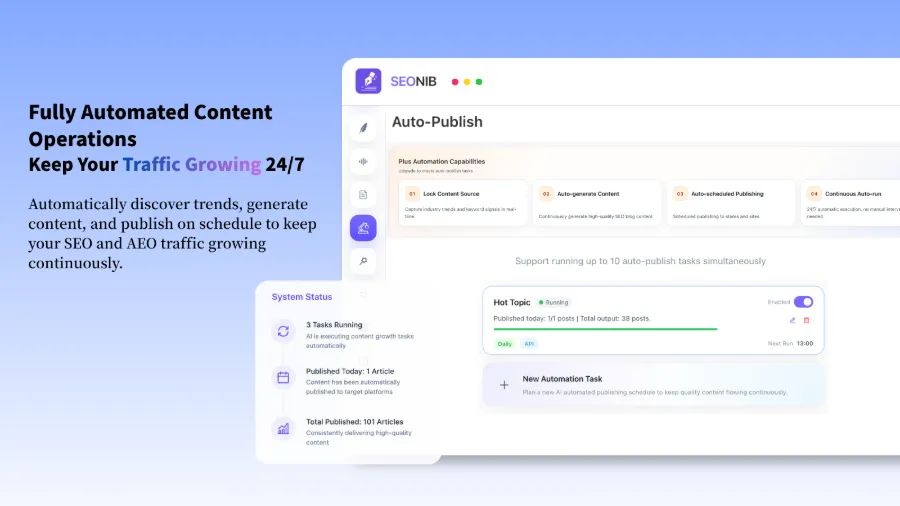
Multi‑platform sync is handy for sellers operating both Shopline and Shopify. An article about “hiking gear selection” can be launched simultaneously in both stores’ blog sections without logging into each backend and copying/pasting. The saved time is spent monitoring rankings and tweaking product pages, not manually moving web content.
Frequently Asked Questions
Can I really get traffic without ads, relying only on content?
Yes, but it takes time. My natural traffic showed almost no change in the first two weeks; by the third week I saw occasional clicks, and by the second month the impressions in Search Console started climbing. The four‑fold increase after three months assumes consistent output—if you publish one or two articles a week and then stop, you’ll never hit the inflection point. SEO content’s cumulative effect is real, but don’t expect returns in the first week.
Will automated content lead to poor‑quality articles that get penalized by search engines?
It depends on how you configure the system. Throwing in a keyword without any configuration can produce articles with duplicated info or logical gaps. However, after setting up a brand knowledge base, internal‑link rules, and a blacklist, the system consistently produces articles that pass automated content quality checks. I’ve been running SEONIB continuously and have never received a manual action warning from Google.
What if Shopline doesn’t support direct blog integration?
Shopline includes a blog feature, but it’s hidden and the editor is basic. If your store’s blog page isn’t in the navigation, enable the blog module in the backend settings. If you still don’t want to use Shopline’s built‑in blog, you can create an external WordPress sub‑site, host the blog on a subdomain, and sync it with the publishing tool. Traffic can still flow back to the main store’s product pages.
Are there copyright concerns with AI‑generated images and content?
I recommend not using purely AI‑generated images, as they can trigger copyright disputes. I use royalty‑free libraries like Unsplash and Pexels; the system can automatically match images from these libraries, saving a manual selection step. Text content is generated from the brand knowledge base and product information, making it structurally original and not subject to plagiarism concerns.
Will publishing multiple articles daily affect my store’s authority?
Shopline doesn’t have an explicit “content frequency penalty.” At my peak I published seven articles a week and the backend metrics remained normal. However, be aware that publishing the exact same article across multiple platforms can be flagged as duplicate content by search engines. My approach is to keep about 20% variation per platform—adjust the opening and concluding paragraphs to suit each audience’s profile.
Share Article