
SEO Automation: From “Handcrafted” to “Hands‑off”, My 2026 Traffic Growth Record
A few years ago I was still struggling with the blog content for a SaaS product. Every day I stared at keyword tools, wracking my brain for titles, then stared blankly at an empty editor—feeling as if I were required to prepare a variety of nutritious meals every day for a child who never wants to eat, while also making sure he grows. Even more frustrating, the “delicacies” (articles) I painstakingly cooked up might never be tasted by the picky “diners” of search engines.
Our team’s target is the global market. That means we need not only English content but also coverage of Chinese, Japanese, Spanish, and other major markets. The initial strategy was “hand‑crafted”: hire writers, find translators, manually publish to each platform’s blog. The result? Costs skyrocketed like a rocket, efficiency lagged like a snail, and the traffic growth curve was as flat as a dead pond. We fell into the classic “content production dilemma”: we produced, but no one read; some read, but no conversion; we wanted to optimize, but had no clue where to start.
The Turning Point: When “Manual Driving” Hit the Traffic Wall
Things changed at the end of 2025. We noticed that some competitors’ blogs were updating at an incredible speed, covering topics that were both broad and fresh, clearly not at a human writing pace. Even more crucial, their multilingual content was almost synchronized. Something was off.
We reviewed our own workflow: keyword research (manual) → topic meetings (argumentative) → writing assignments (chasing) → translation & proofreading (error‑checking) → multi‑platform publishing (copy‑paste) → waiting for indexing (praying). If any link got stuck, the whole chain halted. Moreover, much of our content was based on what we thought users would search for, not what they actually searched for. That cognitive gap was the traffic wall.
One time we poured effort into a deep article about “Optimizing SaaS Subscription Models,” feeling it was an industry textbook. After publishing, its performance in search engines was like a stone tossed into the Pacific—no ripples. In contrast, a short solution post we casually translated about a specific API error code quietly generated a steady stream of consulting leads. The contrast was painful: we were pushing in the wrong direction.
Introducing “Autopilot”: From Skepticism to Trial
So we started looking for a tool that could systematically solve the problem. The core requirements were clear: automation, based on real search demand, multilingual support, direct publishing. We didn’t want another “writing assistant” toy; we needed a system that could take over the whole messy pipeline from demand discovery to content delivery.
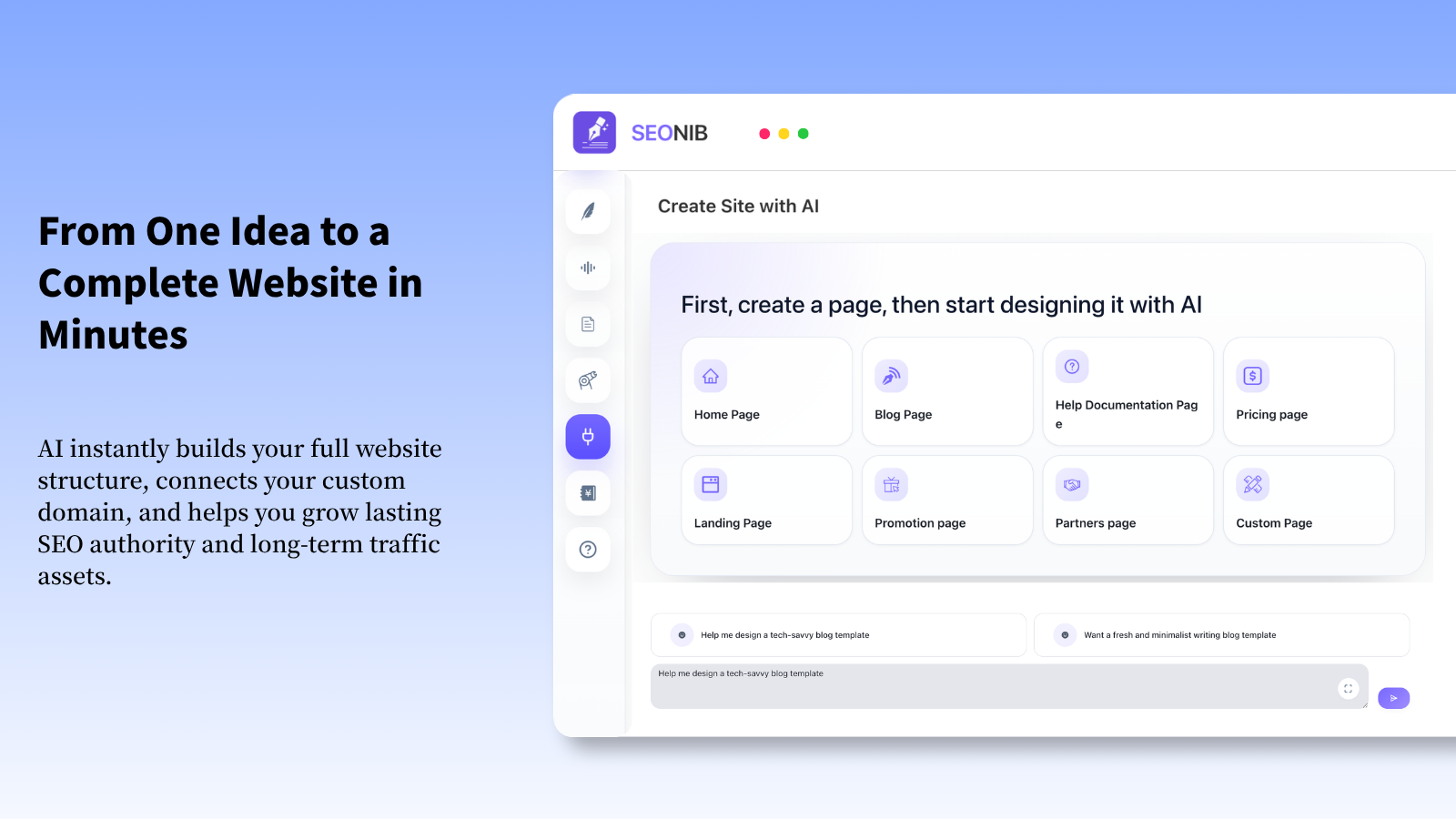
That’s when we encountered SEONIB. Honestly, our initial attitude was half‑skeptical. We had tried many AI writing tools, and the generated content was either generic or logically bizarre, far from “ready to publish.” But SEONIB’s pitch resonated: it’s not just a content generator, but an “SEO growth system” that automates the entire workflow from trend discovery to indexing, focusing on producing content that users truly search for.
We decided to test it with a small project: automatically generate onboarding guides and FAQs for a newly launched feature across nine language markets. We set seed keywords, chose a publishing frequency, and then launched it. The process was surprisingly simple—almost too simple—leaving us a little uneasy.
Observations and Surprises: AI’s Work Was Different from What I Expected
After the first batch of articles was generated and published, we didn’t see an immediate traffic surge. That was expected; indexing and ranking take time. But as we kept monitoring, several interesting points emerged:
“Strangeness” of Topics: Some article topics generated by SEONIB were never discussed internally. For example, it created a detailed tutorial on “How to integrate our SaaS payment component into Shopline.” Shopline is a partner platform, but we had never written an integration guide for it. That article later became the main reference for users of that channel. This shows the system’s view of real search demand is more “outward‑looking” than our internal team’s.
Structural Consistency of Content: Multilingual versions weren’t simple translations. They kept core information consistent while adjusting examples and localized contexts. The Japanese version emphasized rigorous step‑by‑step descriptions, while the Spanish version adopted a friendlier tone. Such subtle differentiation is hard to achieve at scale with a single human translator.
“Relentless Efficiency” of Publishing: Content was automatically posted to our WordPress main site and synchronized via webhook to other channels. We never again received Slack messages from the ops team saying “content ready, please publish manually.” The process transformed from a “project” into a “background service.”
About 30 days later, we checked the data and saw the number of indexed pages growing linearly and steadily, instead of the previous pulse‑like spikes (each manual batch caused a jump, then stagnation). Total traffic hadn’t exploded yet, but the growth base was widening. This is a healthier, more sustainable sign—you’re not pushing a couple of “viral” pieces, you’re building a content foundation.
“Hands‑off” Followed by Active Intervention: Division of Labor Between Human and System
Does relying completely on automation lead to lower content quality or brand tone drift? That was our constant worry. In practice, the answer is no, but we had to redefine “intervention.”
We stopped intervening in the “topic selection” and “writing” stages. The system outperformed our guess‑based decisions with data‑driven performance. Our interventions shifted to higher‑level tasks:
- Optimizing Information Sources: We regularly fed SEONIB with the latest product updates, high‑frequency customer issues, and competitor dynamics as keyword or Q&A lists, giving the system fresh “ingredients” to produce content that reflects our current state.
- Setting Rules and Boundaries: We defined usage guidelines for core brand terminology, prohibited certain competitive topics, and set length preferences for markets that favor concise guides. The system operates freely within these boundaries.
- Analyzing Results, Not Process: Weekly we no longer look at “how many words were written,” but at “how many new pages were indexed,” “which new pages brought initial traffic,” and “how well search terms match the content.” Our role changed from “chef” to “restaurant manager,” caring about foot traffic and dish reputation rather than every chopping motion.
One time the system automatically generated and published an article on “SaaS GDPR Compliance Settings,” which was very thorough. A legal colleague saw it and was surprised that some clause explanations were clearer than our internal training docs. We joked that the AI had secretly studied the EU website. In reality, this showed the system’s strong ability to fetch and synthesize publicly authoritative information, producing practical content rather than just marketing fluff.
The Humorous Cost and the “Mild” Traffic Growth
The whole process sounds smooth, but there were moments of humor (or resignation).
For instance, the system once got obsessed with generating variants of “How to get our SaaS product for free.” We had to quickly add a rule banning any topic containing “free,” “free of charge,” or similar诱 words. The AI’s interpretation of “traffic potential” can sometimes be overly literal, targeting human weaknesses, requiring human moral and commercial calibration.
Also, after using SEONIB, the traffic growth curve didn’t become the legendary “exponential surge.” It resembled a steady upward slope. That actually made us feel more comfortable. SEO is about accumulation, not speculation. Overnight fame often leads to rapid decline. Now our blog is like a slowly expanding coral reef, continuously attracting tiny plankton (users) from the search ocean. The growth is modest but solid.
FAQ
Q: Can AI‑generated content really be recognized and ranked by search engines?
A: In our experience, yes. The key is that the system builds content based on real search data and questions. Search engine AIs are also evolving; they reward content that solves user problems, regardless of who wrote it. We’ve observed that AI‑generated pages that precisely match specific long‑tail queries get indexed and ranked quickly.
Q: Do I need to be an SEO expert to use this automation system?
A: Quite the opposite. No one on our team is an SEO specialist. The value of such a system lies in encapsulating complex SEO logic (keyword research, competitive analysis, content structure optimization, multilingual adaptation) into automated operations. Your role shifts from “executor” to “strategic inputter” and “result overseer.” You need to understand your business and users, not the search engine algorithm.
Q: How is multilingual content handled? Is it just translation?
A: Based on our observations, it’s not a simple sentence‑by‑sentence translation. The system seems to reconstruct content based on typical search phrasing habits and content preferences of each target market. For example, the Chinese version emphasizes steps and screenshots, while the Japanese version stresses logical order and term accuracy. This yields better results than a uniform template translation.
Q: If everything is fully automated, will my content team become redundant?
A: Their work will transform, not disappear. They move from daily writing to higher‑value activities: planning thematic directions, analyzing traffic data, feeding content insights back into product improvements, and creating deep strategic pieces or case studies that cannot be automated. Human effort is freed from the “content production line” and redirected to “content strategy and enablement.”
Q: What’s the biggest risk or downside?
A: Initially you need to invest time in “calibration” and building trust. You must monitor the system’s output, set reasonable rule boundaries, and be prepared for topics that differ from your intuition. Another risk is that, if left completely unattended, content may drift in a particular direction (e.g., too technical or too sales‑y). Regularly reviewing and optimizing information sources is crucial. It’s not a magic wand but a powerful engine that needs taming and collaboration.
分享本文