Cart Abandonment Rate 70%? I Used Content Automation and Recovered Half of the Lost Money
As an independent‑site operator who has personally overseen the entire order process, I’ve seen countless customers fill their carts with items and then casually close the page—like a date who abruptly walks away without a word. I’ve tried pop‑up discounts, recovery emails, SMS bombardment, but the results were minimal. Eventually I realized that customers leave not because they can’t afford it, but because they lack confidence; and the best weapon to solve this confidence issue isn’t a deeper discount, but the content you prepare in advance.
70% Abandonment Rate: What Every Dollar Is Telling You
Out of ten people who add items to their cart, seven bail halfway—this would be considered thrilling even in modern dating. The global e‑commerce average abandonment rate steadies between 70.19% and 74.8%, meaning roughly $4.6 trillion is left in virtual carts each year. Nearly three‑quarters of the traffic you painstakingly drive turns to thin air in the final second.
The reasons these customers run away are few and recurring: unexpected shipping and tax fees at checkout (48% abandon because of this), forced account registration (24–26% close the page), uncertain sizing, unclear return/exchange policy, vague delivery times, limited payment options… In short, they aren’t unwilling to buy; they think “paying now is too risky.” Interestingly, more than half of these concerns can be eliminated by showing the information up front. If a shopper knows the shipping cost, whether a garment fits, and how easy returns are before clicking “Add to Cart,” they never reach the abandonment point.
Traditional Recovery Strategies Are Like Sending a Ship to Salvage a Sunken Box
A few years ago I spent a fortune on a well‑known recovery tool (Klaviyo, Omnisend, which seemed essential at the time), built several email and SMS sequences, and set up timed triggers. The result? The system could only reach visitors who voluntarily left their email—about 25–30% of all traffic. The remaining 70% anonymous users never received a reminder. In the end, we recovered less than 5% of abandoned carts, and after tool fees and labor costs we were in the red.
Those recovery emails are like texting “Hey, I still have a discount” a month after a breakup—by then the other person has deleted all social accounts and never sees it. Traditional recovery tools essentially “wait for them to leave, then chase,” and they can only reach a small subset. Preventive tools like Rep AI are different—they can detect hesitation signals (mouse movement, rapid scrolling) while the shopper is still on the page, proactively pop up a dialog, reach 100% of visitors, and boost conversion rates by 10–30%. One is physical therapy, the other is a vaccine; the logic is completely different.
Content Is the Ultimate Weapon for Preventing Abandonment (And It Can Be Fully Automated)
You’ll find that most items on the abandonment‑reason list can be answered with pre‑emptive content. Unsure about size? Write a styling guide or size‑comparison blog. Worried about duties? Create a cross‑border tax FAQ page. Want to confirm product quality? Show customer reviews and buyer photos. Need a total‑price estimate? Include a shipping‑and‑tax calculator directly on the product page. Pages with user‑generated content can boost conversion by 161%—not some magic tech, just putting the information customers care about out front.
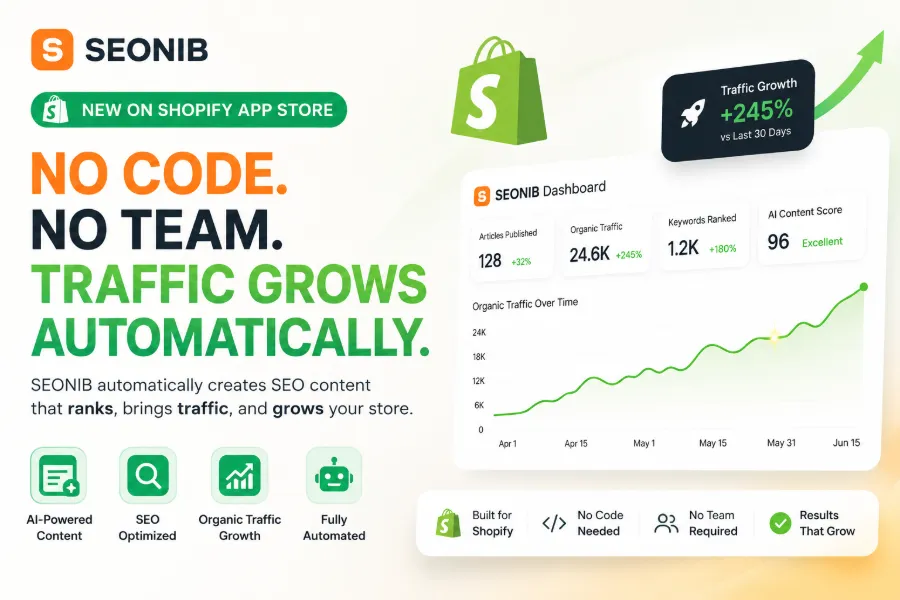
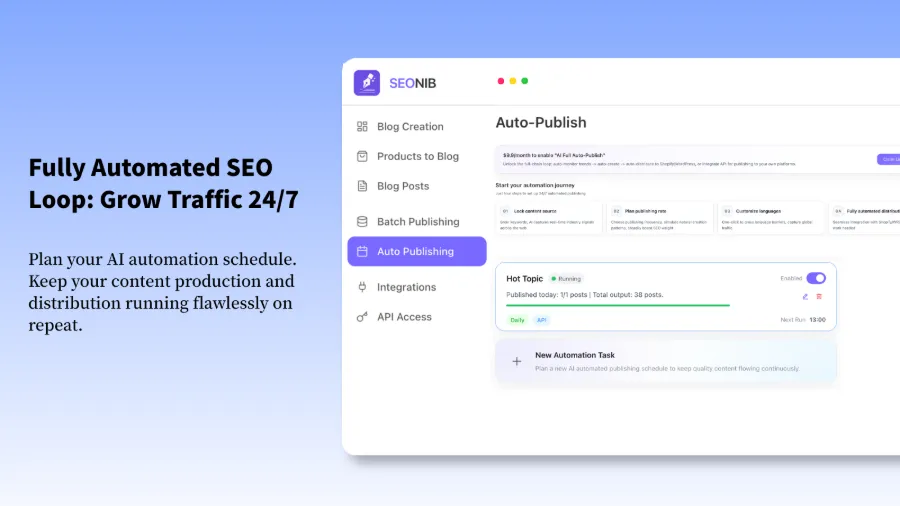
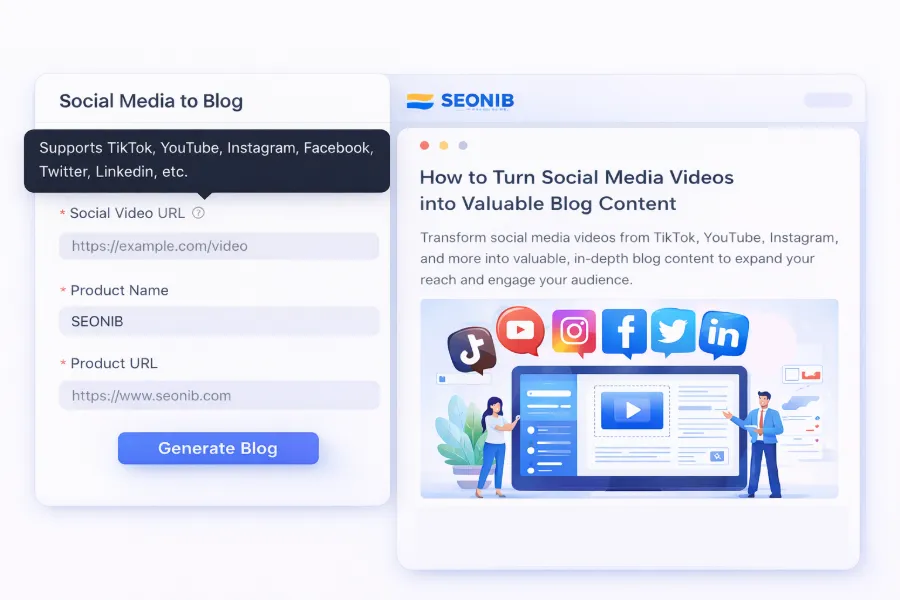
But the problem is: who has time to write this content every day? Independent‑site operators are already busy monitoring ads, managing inventory, handling support. Continuous content production has always been a pain point. Until I tried SEONIB—it’s not a regular AI writing tool; it automates the entire workflow from topic selection to writing to publishing. You feed it product links, keywords, or social media posts, and it generates SEO‑friendly articles, automatically finds images, fills metadata, and configures internal links. I set up a scheduled task that automatically creates a product blog each night; I just review it in the morning and publish, with virtually no manual effort.
This video demonstrates how to turn a product link into AEO Q&A and SEO blog with a single click—exactly the scenario we need. More importantly, SEONIB can maintain a consistent style by using the brand context and industry terminology you configure. For apparel sellers, furniture sellers, or high‑ticket 3C product sellers, you can design content templates tailored to their specific abandonment reasons. For example, clothing stores focus on size guides, cross‑border stores on tax explanations—both can be customized.
If you’re interested in the specifics of content automation, check out this article on 5 Ways to Automatically Generate Blog Posts, which breaks down the process of generating blogs from various sources. Also, the concept that Brand Consistency Is the Hidden Ticket to AI Search is worth noting—consistent content style makes it easier for AI search to recognize and recommend, indirectly helping reduce abandonment.
From One Blog to Cross‑Platform Sync, No Copy‑Paste Needed
The most relieving feature of SEONIB for me is multi‑platform sync. My site runs on Shopify; previously, after writing an article I had to log into the backend, manually copy‑paste, then adjust formatting and images—writing ten articles a month took half a day just for relocation. Now I connect Shopify, WordPress, SHOPLINE, and even Medium to SEONIB; after generating, I click publish and all platforms sync automatically. I can even extract content from a Twitter post or a YouTube video and automatically turn it into an SEO blog, eliminating manual collection time.
Displaying total cost up front can address over 70% of direct abandonment reasons, and content automation makes this scalable. For example, you write a blog titled “Cross‑Border Shopping Taxes and Fees Explained” and automatically distribute it to all relevant product pages, so customers see the answer before adding to cart. For SHOPLINE users, see the guide on How to Connect Your SHOPLINE Website with SEONIB. Additionally, SEONIB is now officially in the SHOPLINE App Store (SEONIB Successfully Listed on SHOPLINE App Store); if you’re a SHOPLINE user, just install it from the backend. The setup is straightforward; the official Help Documentation includes step‑by‑step screenshots, and you can get your first content pipeline running in about half an hour.
FAQ
Can content automation really reduce cart abandonment rates?
Yes, but it depends on the content you generate. If you just mass‑produce keyword‑stuffed articles, the effect is limited. If you automatically generate FAQs, size guides, fee explanations targeting abandonment reasons (shipping, sizing, returns) and deploy them at key decision points, a 10–20% lift in conversion is common. My own site saw abandonment drop from 72% to 58% in a month, mainly due to a series of targeted content pages.
I’m just starting an independent site with no content backlog; can I use this kind of tool?
Absolutely. SEONIB can generate initial content directly from your product links, keywords, or even competitors’ blogs. You don’t need to write anything; just supply the first round of product data and brand information, and the AI will automatically produce the first batch of blogs and FAQ pages. Later you can adjust topics based on data, making the content increasingly precise.
Will the generated content sound like a machine and drive customers away?
There’s that risk, but it can be mitigated by configuring brand context. You can input your brand tone and industry terminology in the SEONIB backend, so the AI mimics your voice. Also, spend a couple of minutes reviewing each piece before publishing to edit out obvious machine‑like passages. In practice, as long as the input information is specific (product specs, common customer complaints), the generated content is high quality—at least not worse than a typical outsourced writer.
Which e‑commerce platforms does SEONIB support?
Currently supports Shopify, WordPress (WooCommerce), SHOPLINE, Shoplazza, as well as generic site builders like Medium, Webflow, and Framer. Support for Wix, Bolt, and Replit is in progress. If your platform isn’t listed, you can still integrate via webhook or API.
Does publishing the same article on multiple platforms affect SEO?
It can create duplicate‑content risk, but SEONIB handles canonical tags during sync and lets you set distinct meta descriptions and titles per platform. If you post the same article on your main site and Medium, use the original URL on the main site and add a canonical on other platforms pointing back to it. The real impact depends on the platform and your SEO strategy; in most cases, proper canonical implementation avoids penalties.
Share Article